Zine Ideas About Your Life
Begin with one scene, routine or object instead of trying to explain your whole history.
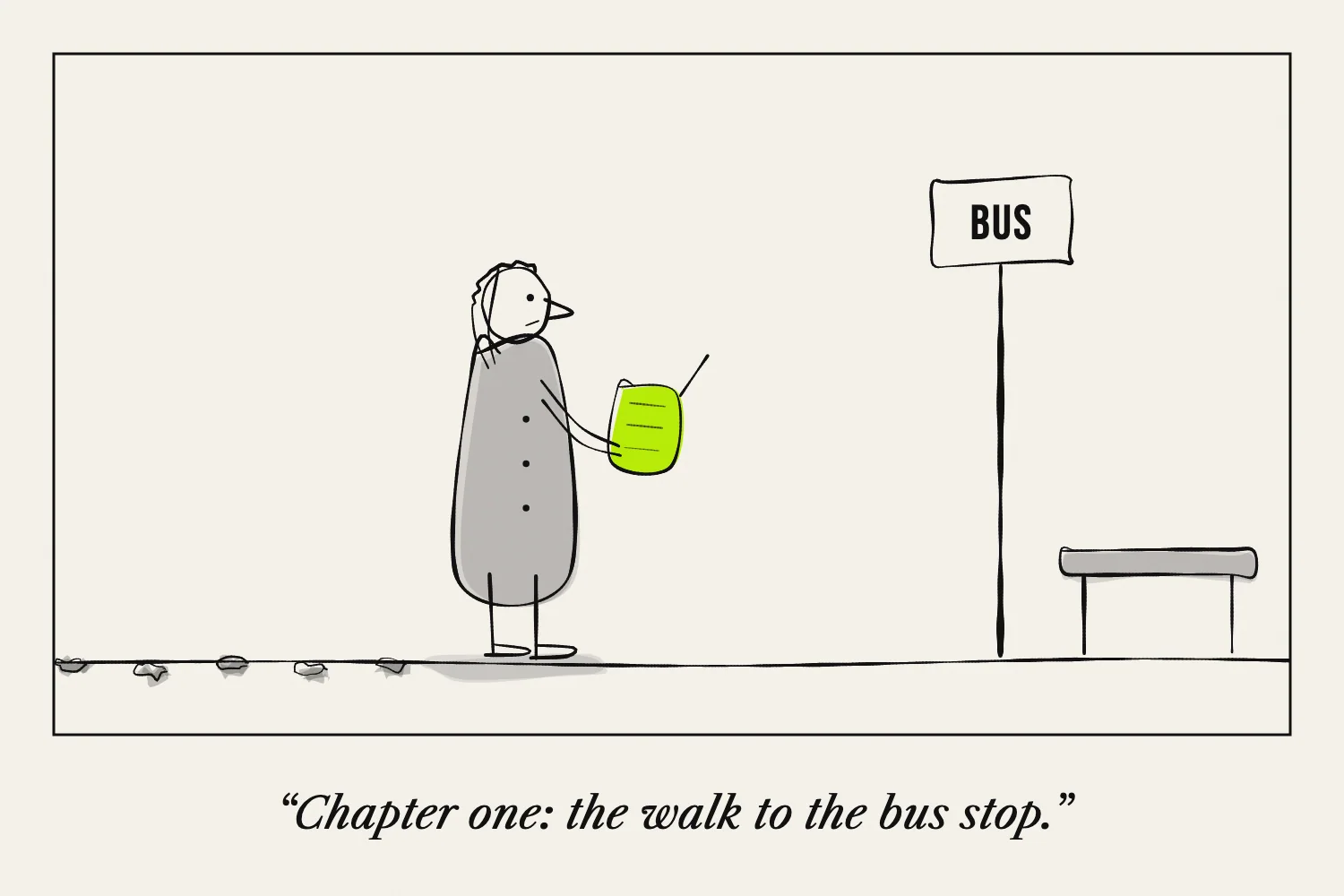
You do not need an extraordinary life event to make a personal zine. You need something you can describe closely enough for another person to understand why it matters.
A useful starting point is a small unit: one journey, one room, one conversation you remember or one thing you keep.
Follow a routine
Describe the first ten minutes after you get home. Make a map of the route you take when you need time alone. Record what you prepare before a weekly activity.
A routine gives the pages a natural order. You can show the sequence first, then add what the actions mean to you.
Notice the details that distinguish your version from a general description: the bag that always goes on the floor, the light you leave off or the task you postpone.
Let an object organise a memory
Choose something ordinary with a history: a key, a repaired sleeve, a notebook or a kitchen utensil.
Give the reader enough information to picture it. Then explain how it arrived, what happened around it and why you still have it.
You do not need to force the object into a symbol. Its practical history may already be interesting.
Write about a change at a manageable scale
Instead of “everything about moving,” try the first meal in a new home or the first time you found a route without checking a map.
Describe what you expected, what happened and what you understood afterwards. Those three stages can give the issue a clear progression.
If your memory is uncertain, say so. Reconstructed dialogue should not be presented as a transcript.
Decide what is yours to share
A personal account can involve other people. Before including their messages, photographs or identifying details, consider whether those details are necessary and whether you have their permission.
You can focus on your own response without publishing every part of the event.
Leaving something out is an editorial decision, not a failure to be honest.
Make a first page that welcomes a stranger
A reader may not know the place, relationship or situation you are describing.
Supply that context in plain language before asking them to follow a complicated memory. “This was the kitchen in the flat I shared with my sister” does more work than an unexplained reference to “the old place.”
Finish when the reader has received the experience you set out to share. You do not need a lesson or a dramatic conclusion.
Next: How to Make a Perzine.