Zine Ideas About the Internet
Turn an online habit into a bounded piece of writing, drawing or visual research.
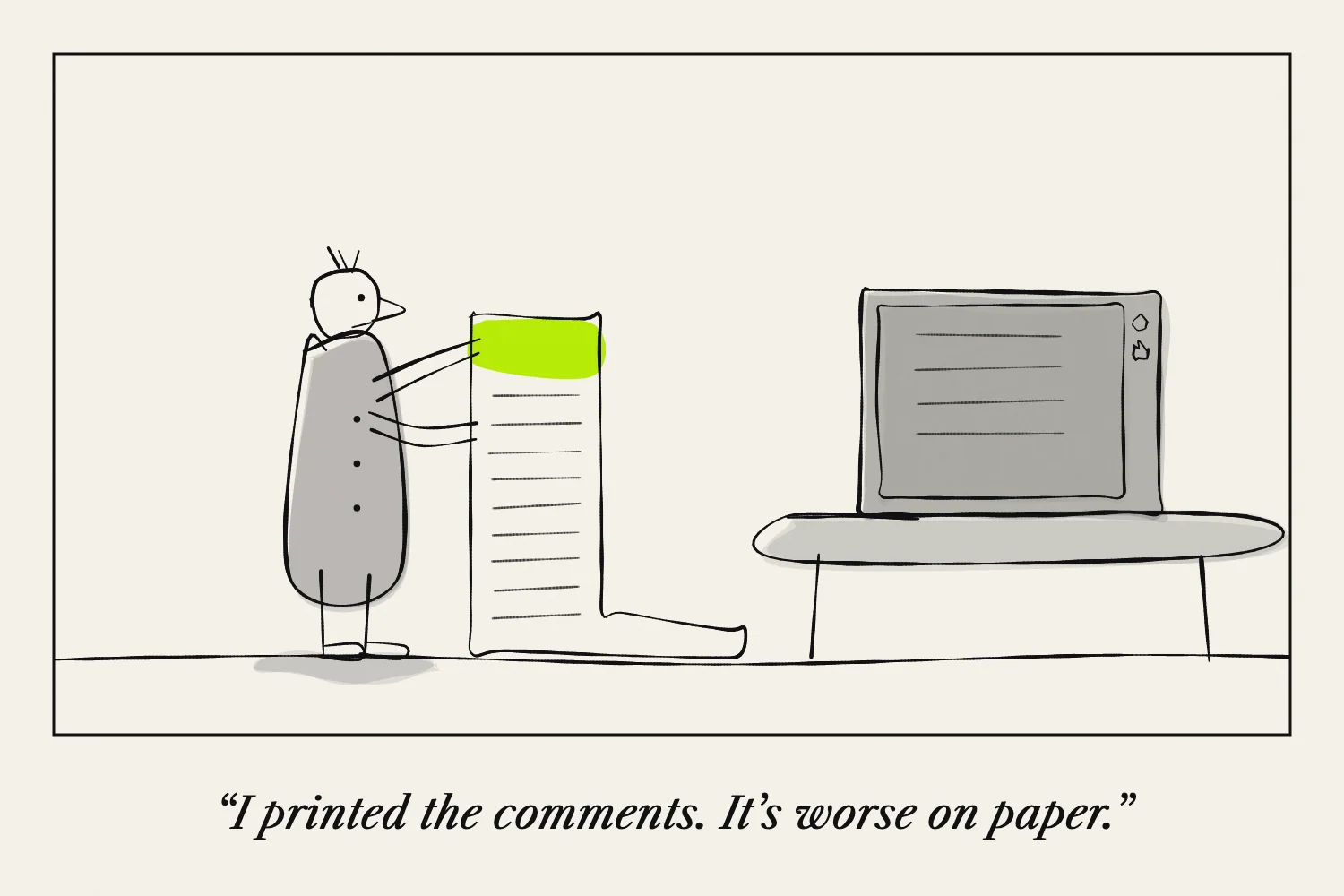
The internet is too large to be a useful subject on its own. Choose an experience within it: a habit, a kind of language, a repeated task or a place you used to visit online.
A zine gives you room to slow that experience down and decide what belongs together.
Describe a habit from the inside
Write about the tabs you keep open, the searches you repeat or the folder where unfinished ideas accumulate.
Choose a small sample and explain what each entry was meant to do. The interesting part may be the gap between your intention and what happened.
You can recreate your own screen as a drawing rather than publishing a screenshot full of private information.
Make a map of a route
Trace how you moved from one question to another during a research session.
Show the branches, distractions and useful discoveries. Add notes explaining why you followed a link or abandoned it.
Keep the map readable. A complete browsing history is usually less useful than a selected route with clear turning points.
Examine a type of language
Collect examples from your own writing: saved usernames, draft messages, search phrases or abandoned profile descriptions.
Ask what changed between versions. Were you trying to sound more formal, more approachable or less identifiable?
If you use other people's words, obtain permission or use material you are authorised to reproduce. A public post is still someone's work.
Revisit an online place through memory
Write about a forum, game space or website you remember using.
Separate remembered experience from verifiable history. “I remember finding it in secondary school” is not the same as knowing its launch date.
If dates or claims about the platform matter, research them and include the sources. You can also make the issue explicitly about your memory rather than a definitive history.
Let paper change the presentation
A page can isolate one image or phrase from the stream around it. A fold can reveal a second interpretation. A printed sequence can make a route that the reader follows in an order you choose.
Use those properties deliberately. Simply printing a long screenshot may leave the reader with tiny text and no clear starting point.
Review what the page exposes
Before printing, check names, email addresses, message previews, locations and account details.
Ask whether each visible detail is needed. Redrawing an example in your own words may communicate the point more clearly than reproducing an entire interface.