Weirdly Specific Zine Ideas
A narrow subject gives you a clear way to choose material and a reader a reason to be curious.
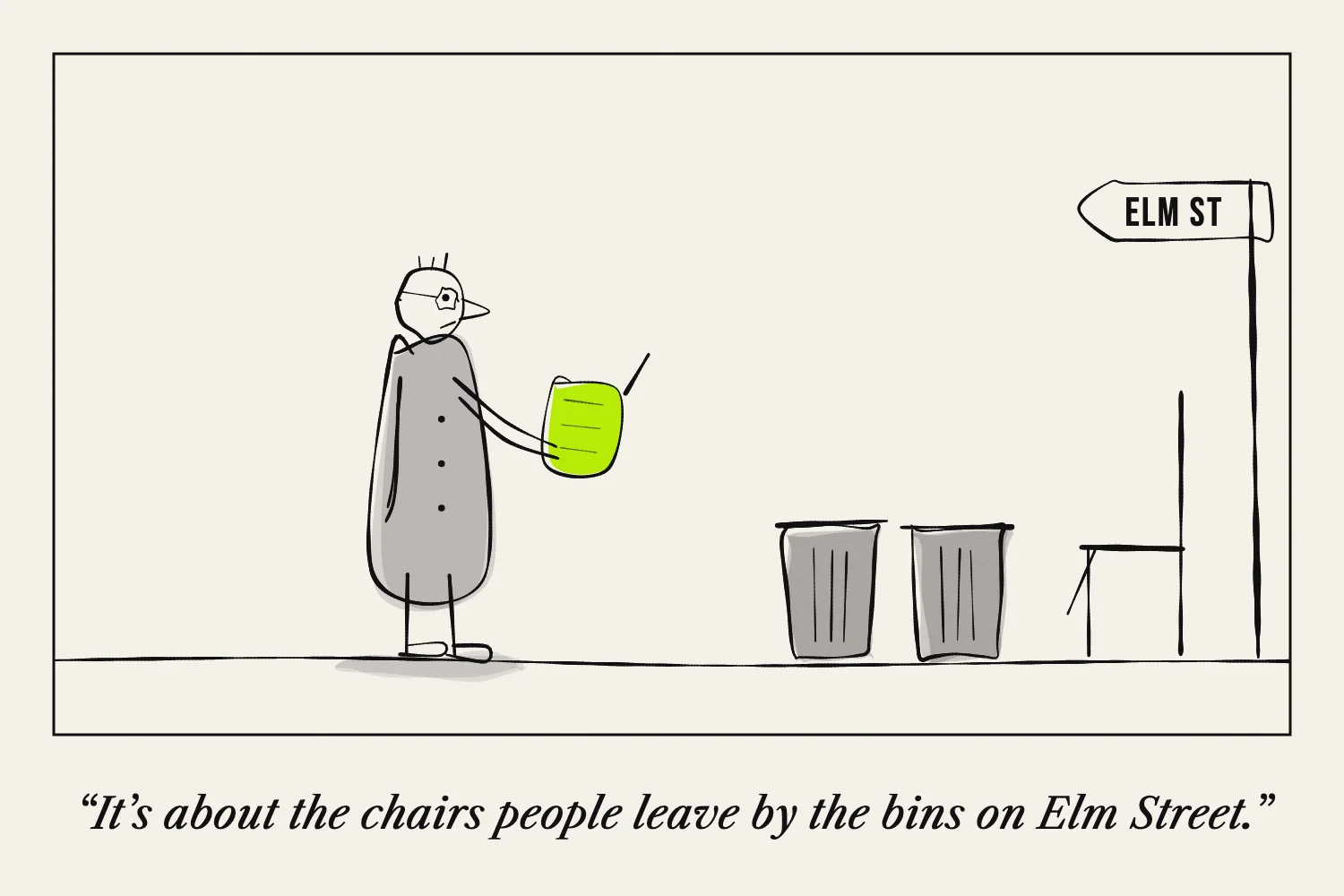
Specificity is useful because it creates a boundary. A zine about “chairs” could go in hundreds of directions. A zine about chairs left beside bins on one street gives you a place, a type of object and a way to gather material.
Try combining three things: a subject, a limit and a method.
Give an ordinary subject a precise boundary
Here are six combinations you could adapt:
- Door handles on one block, drawn from the same angle.
- The spelling of your name on old receipts, with private details removed.
- Repairs on your oldest item of clothing, mapped and dated where you remember.
- Every shade of green in one room, recorded as painted swatches.
- The sounds an appliance makes during one complete cycle.
- Objects that fit inside one particular pocket.
The limit does some of the editing for you. Material either belongs within it or gives you a reason to reconsider the rule.
Make the reader notice a difference
A collection becomes more interesting when the entries are not interchangeable.
For the door-handle idea, look for differences in wear, shape, height or the way a repair was made. You might arrange the drawings from least to most worn, rather than in the order you found them.
Add captions only where they reveal something the image does not already show.
Try an unusually narrow question
You could also organise a zine around a question:
Why do I keep this broken object? What changes along the last fifty steps home? Which parts of a familiar room disappear when I draw it from memory?
A question gives you a reason to select evidence and develop a response. It does not need to produce a definitive answer.
Avoid padding the idea
Narrow does not mean that every possible example must appear.
If you have three strong photographs, design around three. Give them enough room to be read. A short introduction can explain the rule, and a final page can show what changed as you worked.
Repeating the same point in slightly different words will not make a small subject feel deeper.
Choose a title after seeing the material
A working title helps you begin. A final title should fit what the pages actually contain.
Read the sequence and ask what a stranger could notice without your explanation. Use the title and opening lines to supply only the context they need.
Next: How to Make a Zine About One Extremely Specific Thing.