Zine Ideas for a One-Hour Making Session
Use a small format and material you already have to make a complete first version.
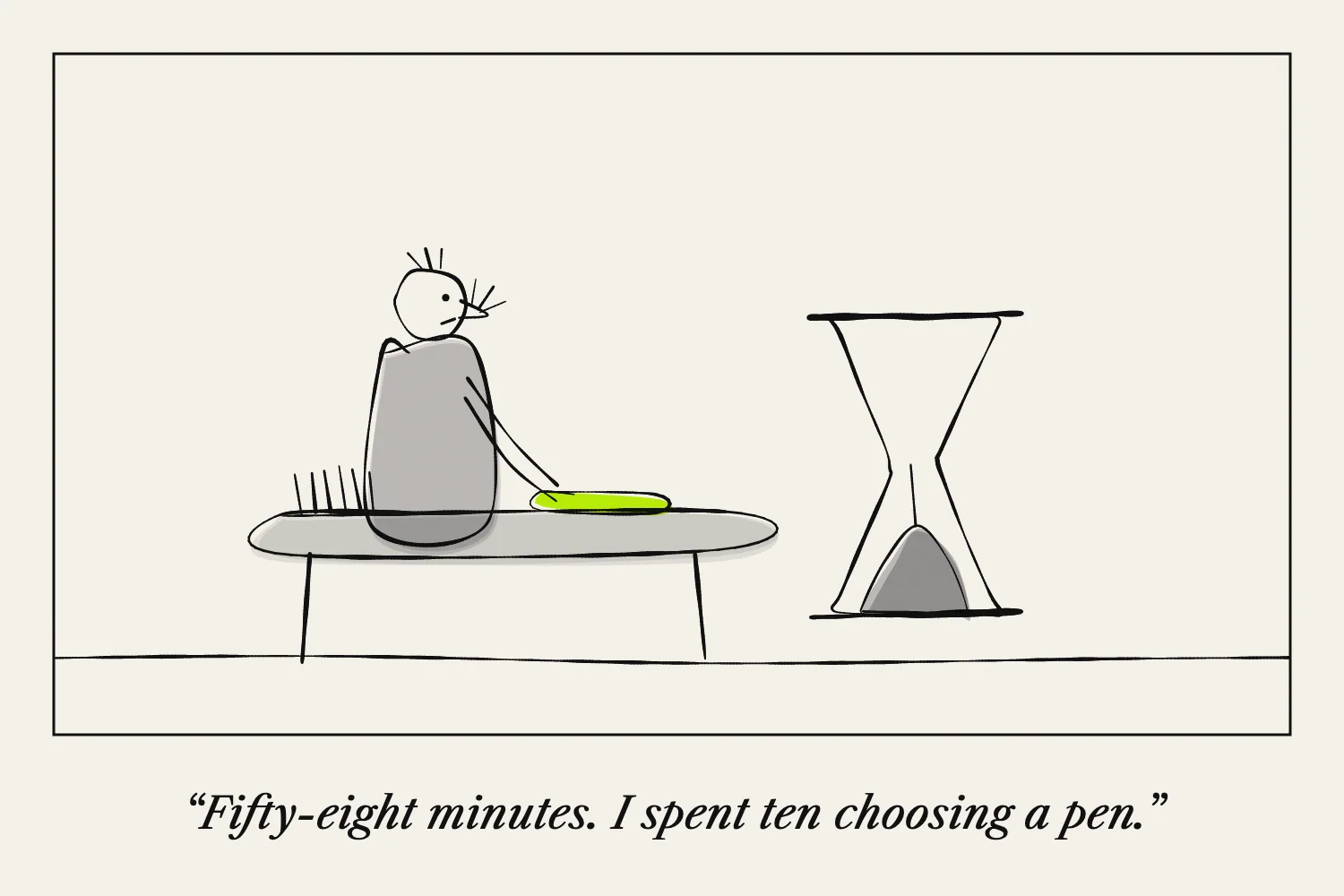
An hour is a useful boundary for an exercise, not a promise that every project will be finished in sixty minutes.
For this session, aim for one readable copy. Choose a subject that does not need interviews, new research or a large amount of image editing.
Pick one of four small projects
Six things I noticed today: one observation on each inside page.
A guide to one drawer: draw or describe six objects and give each a short label.
A tiny instruction manual: explain an everyday task in six steps, with a title and a closing note.
A walk in six images: use photographs you already took, or draw six details you remember.
These choices fit the six inside pages of an eight-page zine, with the other two panels used as the front and back covers.
First ten minutes: choose and gather
Write the title and a sentence stating what the issue contains. Gather only the material needed for that promise.
Do not spend the session comparing every possible subject. If two ideas seem equally workable, choose the one with more material already available.
Fold a blank practice copy if you are unsure about the page structure.
Next twenty minutes: make the content
Give each inside page one job. Write or draw directly enough that the reader can understand it without you standing nearby.
For the instruction manual, check the order of the steps. For the observations, make each one specific. “The bus was late” gives less to picture than a detail about what you noticed while waiting.
Use working text rather than getting stuck on a perfect opening sentence.
Next twenty minutes: assemble and read
Place the content, make the cover and add a name or publishing credit if you want one.
Read the issue from beginning to end. Correct missing context, illegible words and obvious gaps. Check that the page numbers and orientation work after folding.
Avoid redesigning everything simply because one page looks different.
Last ten minutes: make one complete copy
Fold or assemble the issue and test it as an object.
If something remains unfinished, note exactly what needs doing. A complete rough version can be a useful outcome even if you choose to revise it later.
The purpose of the time limit is to keep decisions manageable. It is not a test of your speed or a reason to publish work you are unhappy with.
Next: How to Fold an 8-Page Zine.