Musicians and Their Zines
Playing music and making publications can be connected ways of taking part in a scene.
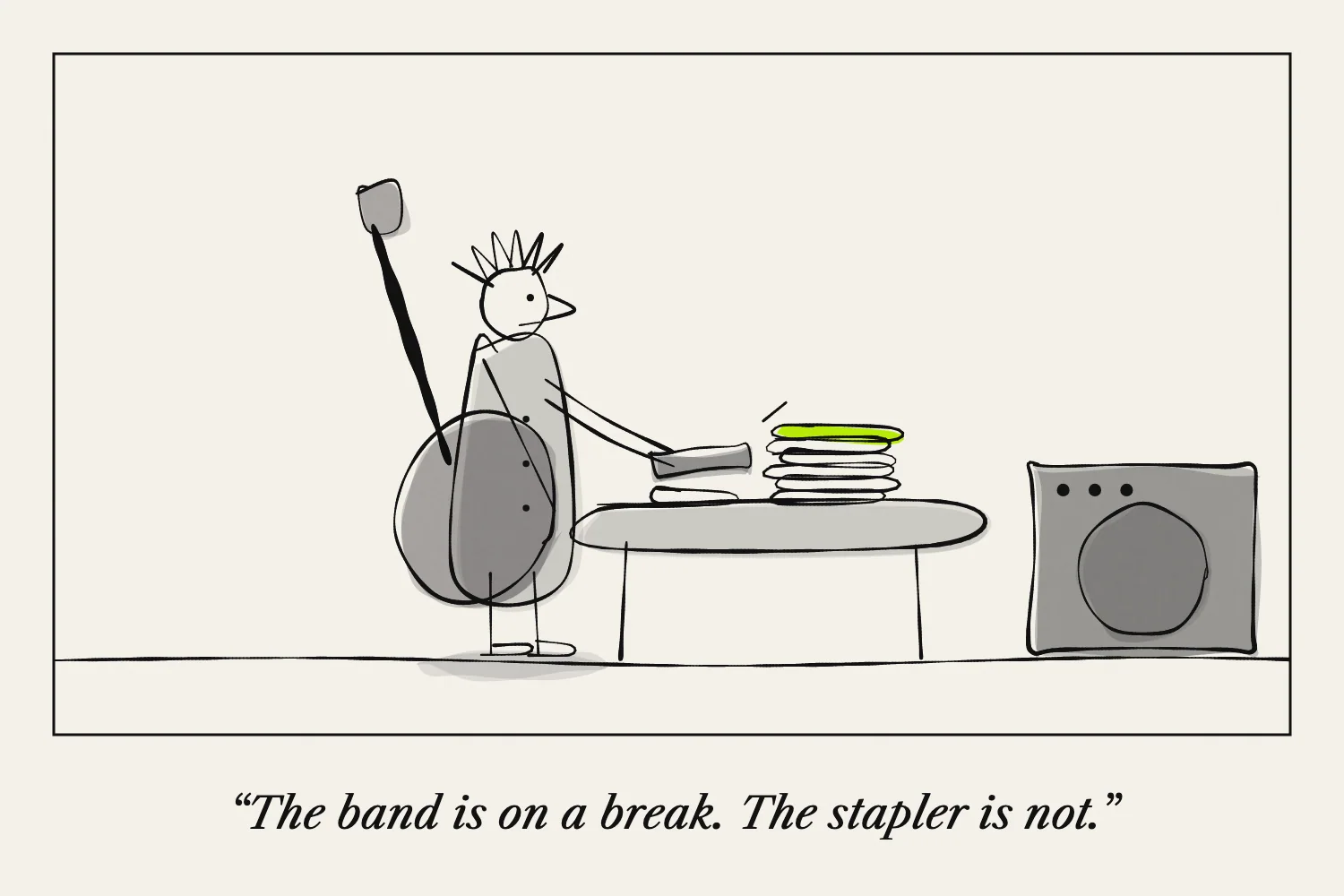
A musician's zine can offer something a recording does not: a longer argument, an account of everyday life, a recommendation or a direct invitation to readers.
The relationship can also work in the other direction. A person may make a publication before forming a band.
These examples show the overlap without treating every zine as band publicity.
Tobi Vail and Jigsaw
Tobi Vail, the drummer in Bikini Kill, made Jigsaw.
NYU's catalogue description of issue 5½ identifies writing about small-town life, music, the band and other zines. It also records contact information for obtaining material.
That combination is useful to notice. Personal frustration, criticism and practical details can share the same issue. The publication gives a reader several ways to engage: recognise an experience, consider an argument or seek out another work.
Allison Wolfe, Molly Neuman and Girl Germs
Cornell's collection catalogue credits Girl Germs to Allison Wolfe and Molly Neuman and connects the publication with Bratmobile.
The Smithsonian's panel on women, zines and punk also identifies Wolfe as a co-creator of Girl Germs and Bratmobile.
The overlap shows why an account of a music movement cannot stop at its records. The same people may also be shaping discussion through print.
Mark Perry and Sniffin' Glue
Mark Perry made Sniffin' Glue after seeing the Ramones in 1976. His official site also presents his work with Alternative TV.
The connection is another version of participation: writing about a scene and making music within it need not belong to separate groups of people.
For the publication's fuller history, see The Story of Sniffin' Glue.
What print adds
A song uses sound, performance and duration. A zine can place a personal account beside a list of recommendations or give an argument several pages to develop.
It can also credit people whose contribution is not heard on a recording: an illustrator, interviewer, editor or person handling distribution.
Those differences are reasons to read the publication itself rather than using it only as evidence that a musician once made one.
Reading across the forms
If you listen to a musician and read their zine, notice where the concerns overlap and where they differ.
Do not assume a lyric is autobiography or that every contributor shares the musician's views. Follow the credits and read each piece as the work of its named maker.
Next: How Rock Fans Turned Zines Into Music Journalism.