How Zines Have Been Sold and Traded
Direct orders, exchanges, shops and distributors offer different ways to reach readers.
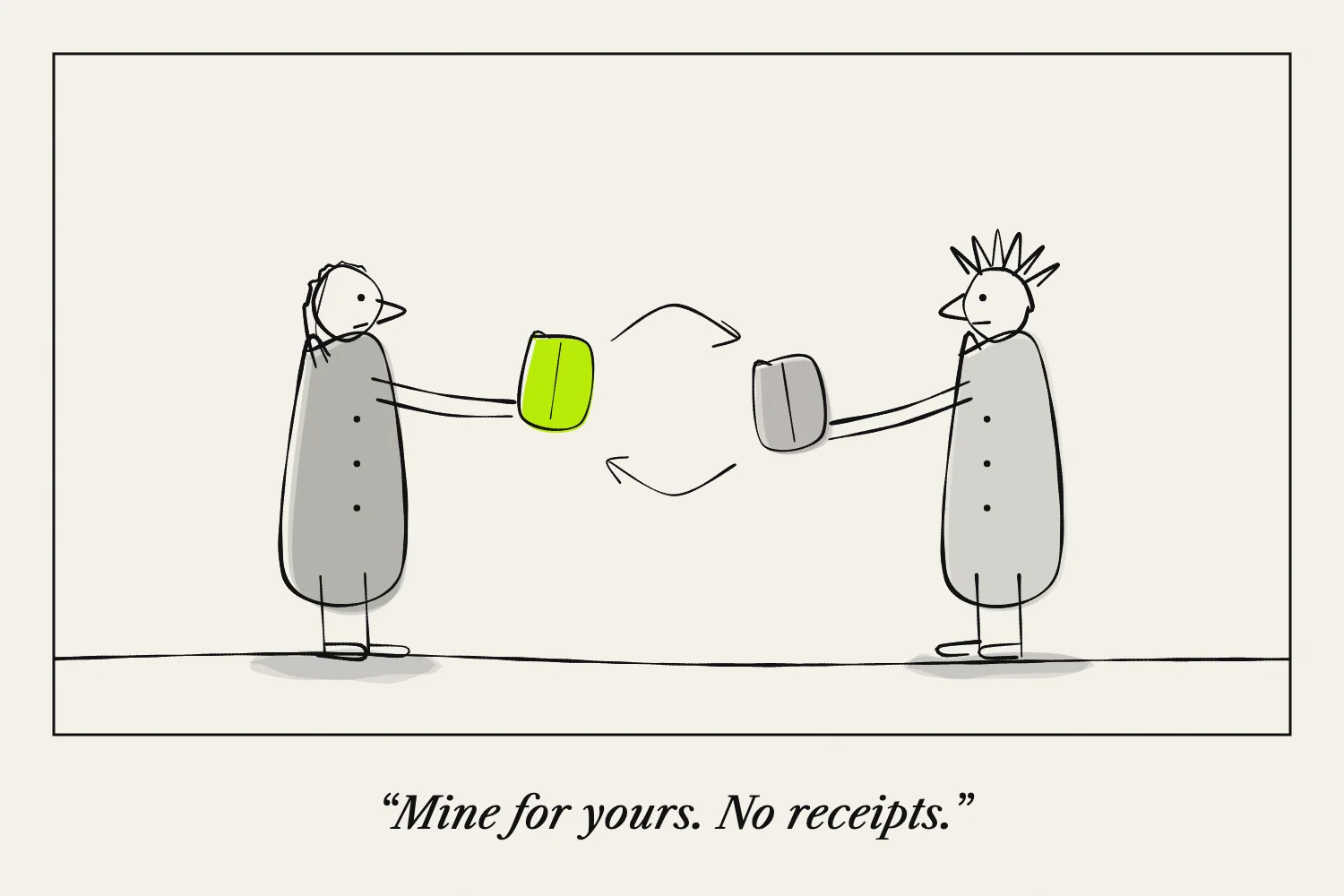
A zine's route to a reader is part of the publication. Someone has to make copies available, explain how to obtain them and complete the exchange.
There has never been just one method. Direct sales, trades and specialist sellers can exist alongside one another.
Direct orders keep the exchange close to the maker
A reader can obtain a copy from the person who made it. Historically, printed contact information helped people arrange that exchange.
Review publications such as Factsheet Five made titles and publishers easier to discover. For the fuller history, see What Was Factsheet Five?.
The practical principle remains useful: a reader needs a clear title, price or exchange arrangement, and a way to contact the publisher.
A trade is an agreement between people
In a zine trade, people exchange publications rather than paying the usual sale price.
Do not assume that every maker wants to trade. Their copies may be limited, or they may need sales to cover production costs. Ask whether they are interested and accept the answer.
For a postal trade, agree on which issue each person will send, the mailing addresses and a realistic time frame. One person's trade copy does not need to have the same page count as the other's; what matters is mutual agreement.
Shops can sell on consignment
Consignment means a shop holds copies for sale while the maker retains ownership until a sale occurs. Payment happens according to the shop's agreement with the maker.
Quimby's consignment page provides a concrete example. Its terms cover payment, inventory, restocking and unclaimed work.
Read current terms before sending anything. A shop's percentage, submission limit and payment process are specific to that shop and can change.
A distro brings titles together
A distributor can give readers one place to discover work by several makers.
The Zine Librarians Code of Ethics distinguishes buying directly from makers from buying through a distro. Its discussion highlights the different roles each route plays.
A useful question for a maker is what the arrangement includes. Is the distributor buying copies outright, taking them on consignment or using another agreement? Who handles postage and unsold stock?
Keep the arrangement understandable
For any exchange, record the number of copies, the agreed price or trade and what has been sent or paid.
Clear records do not make a small project less personal. They reduce confusion and help people keep their promises.
The best method is the one you can sustain while giving readers a reliable way to obtain the work.
Next: A History of Zine Distros.