What Was Factsheet Five?
A review publication helped people find zines—and find one another.
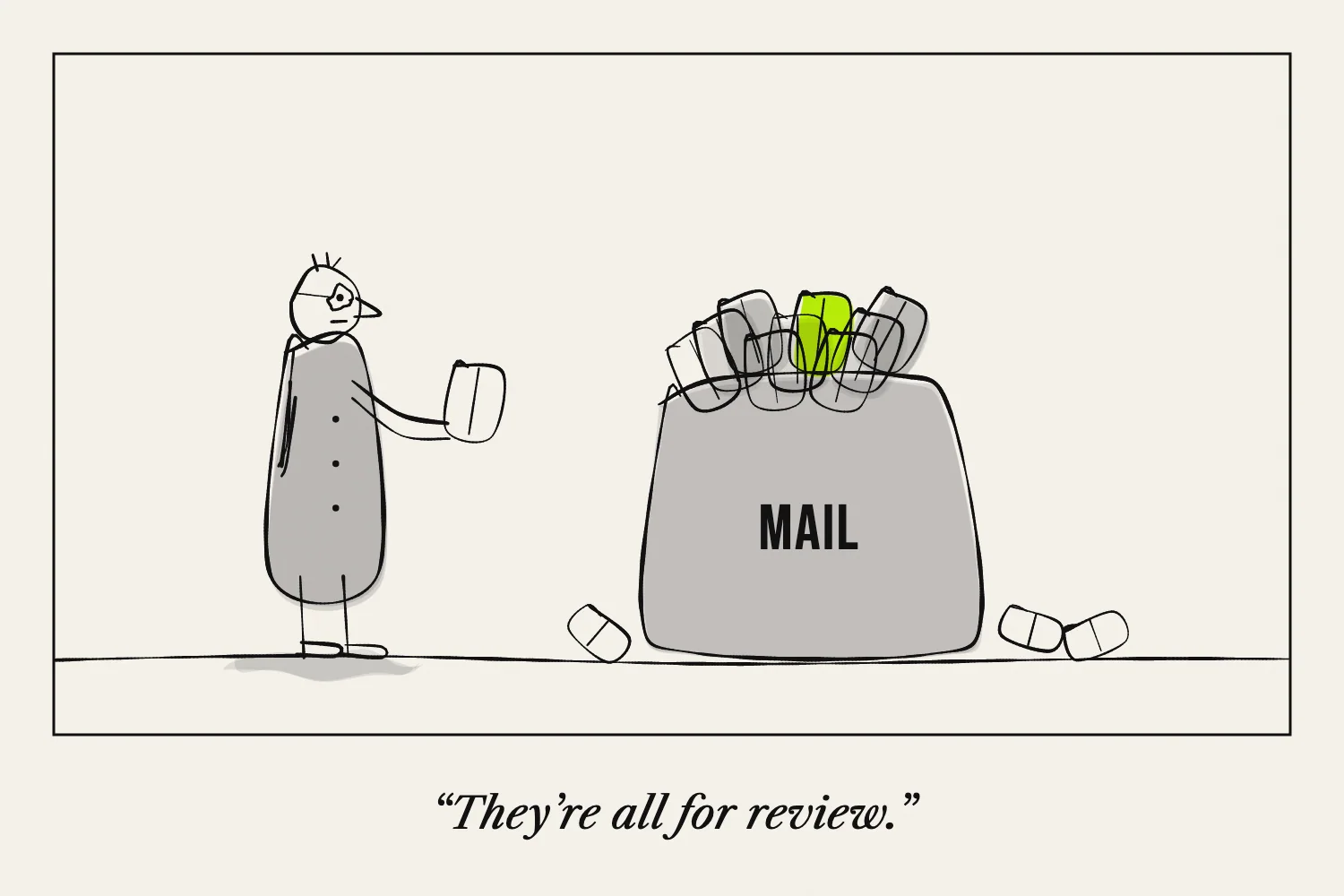
Making a zine solves one problem: your work exists in a form someone can read. It leaves another problem: how will interested readers discover it?
Factsheet Five became an important answer. It reviewed independently produced publications and included details readers could use to contact the people behind them.
That combination made it both reading material and a practical directory.
A small beginning
Mike Gunderloy published the first issue on May 4, 1982. The Factsheet Five Archive Project describes a double-sided sheet with a print run of fifty copies.
The archive also points out a discrepancy in later accounts of where the issue was made. The issue itself gives a Hyde Park address, while some secondary histories place the beginning elsewhere.
For understanding the publication, its small format is the more useful detail. The project began with a compact collection of notes, rather than the substantial review magazine it later became.
The contact details were part of the point
A review could tell someone that a publication existed. An address gave them a way to do something about it.
The New York State Library's history describes Factsheet Five connecting people across interests that included science fiction, punk, politics, wrestling and films.
This breadth mattered. A reader might arrive looking for one subject and discover a publication from a community they did not already know.
In that sense, the magazine made connections as well as recommendations.
It continued under different editors
Gunderloy stopped after issue 44 in 1991. Hudson Luce produced issue 45, and R. Seth Friedman later continued the publication through issue 64 in 1998, according to the State Library.
The changes are a reminder that a publication's title can outlast a particular editor. Its character depends on the people doing the work at a given time.
It also takes continuing labour to maintain a directory: receiving material, reading it, recording details, preparing pages and producing another issue.
The archive preserves the surrounding activity
Gunderloy donated his collection and business files to the New York State Library in 1992. Alongside zines, the archive includes correspondence, mail art and other printed material.
That makes it useful for more than tracking individual titles. It can help researchers examine how publications moved between people and how a publishing network functioned.
A zine community leaves traces in envelopes and letters as well as in finished issues.
What the example still teaches
A useful recommendation needs enough information for the next step. Name the work accurately, explain why it might interest someone and provide a working way to find it.
That principle applies whether the recommendation appears on paper or online. Factsheet Five made discovery part of its editorial purpose.
Read next: Where to Find Zines.