The Rise of the Zine Fest
A fair turns dispersed publications into a place where makers and readers can meet.
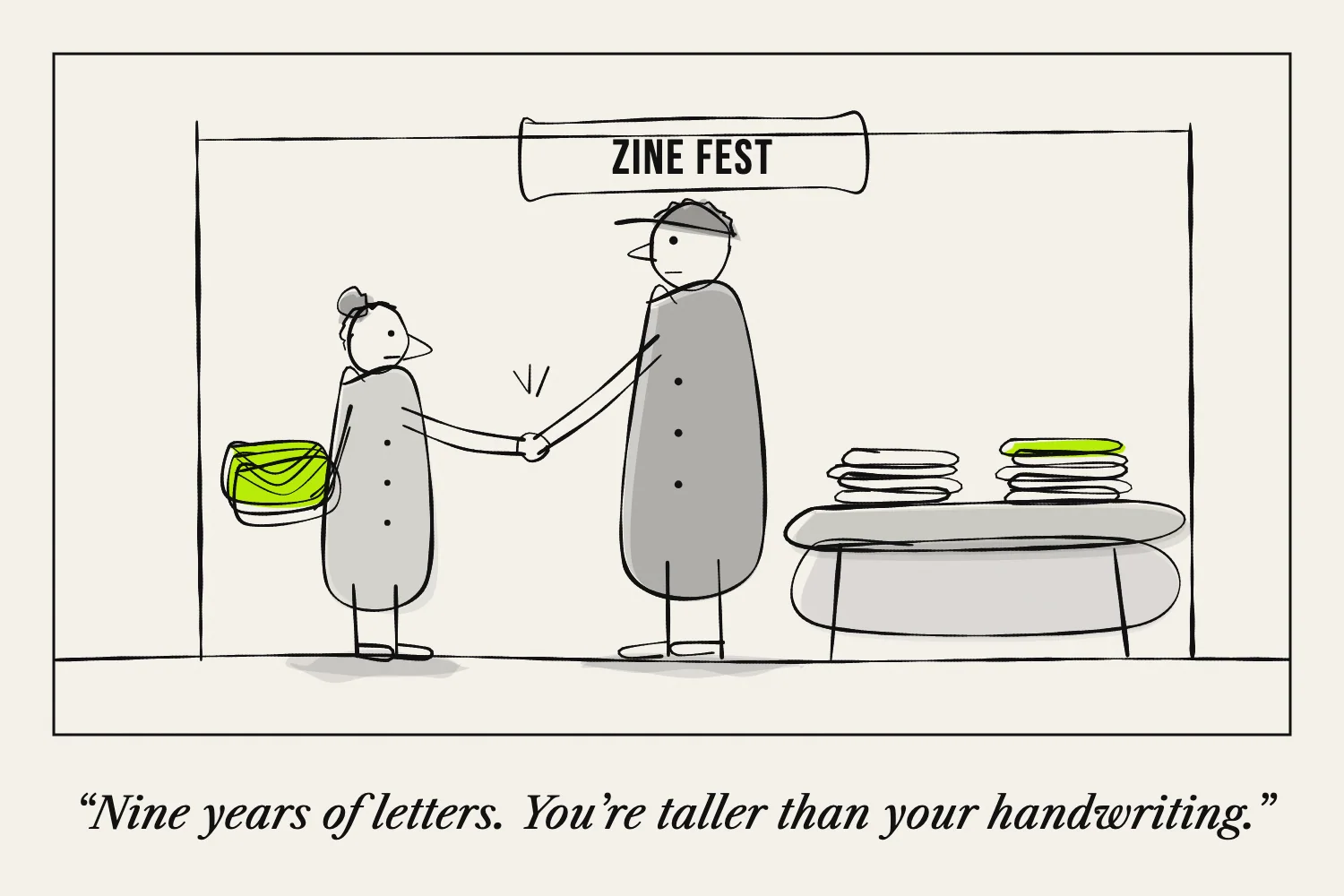
A zine fest brings publications and people into the same space for a limited time. Makers usually present their work at tables, while visitors browse, talk and buy or arrange trades.
Some events also include workshops, readings or discussions. Those activities depend on the organiser; they are not guaranteed features of every fair.
The importance of the format is simple: readers can discover many small publications without already knowing their titles.
An event gives discovery a place and time
A person who sells from home may have no permanent place for readers to browse. A fair provides one.
For the reader, it is possible to compare formats, turn pages and ask the maker about the work. For the maker, it is a chance to hear which parts interest people and meet other publishers.
These encounters are difficult to measure only as sales. Someone may leave with a contact, an idea or a better understanding of what a zine can be.
Different communities built their own events
The Portland Zine Symposium identifies itself as a volunteer-run organisation dating to 2001.
The Toronto Zine Library's history records its first PaperJam fair in 2023, years after the library itself began.
These examples illustrate different starting points: an ongoing event organisation and a library adding a fair to its activities. They do not establish one universal origin for the zine fest.
The work extends beyond setting out tables
An organiser must decide how exhibitors apply, how much space they receive and what the event can accommodate.
Visitors also need information: where to go, what admission costs, whether there are access barriers and which activities need booking.
An event's character comes partly from these decisions. Table fees, selection policies and accessibility arrangements affect who can participate.
A growing profile is not the whole history
A large crowd or a prominent venue can make a fair more visible. Smaller gatherings can still matter to the people who use them.
It is therefore useful to look beyond event size. Does the fair introduce new makers? Can local readers attend? Is there room for people whose work does not fit a conventional bookshop?
Those questions reveal more about its purpose than a claim that it is the biggest or most important.
How to read an event announcement
Check the year first. Then distinguish the application deadline from the visitor dates.
If you want a table, read the exhibitor rules. If you want to attend, check the public programme. These are different ways of participating and often involve different arrangements.
Next: Zine Fairs & Festivals.