Zine Libraries Worth Knowing About
Three different kinds of collection can help you explore zines and their histories.
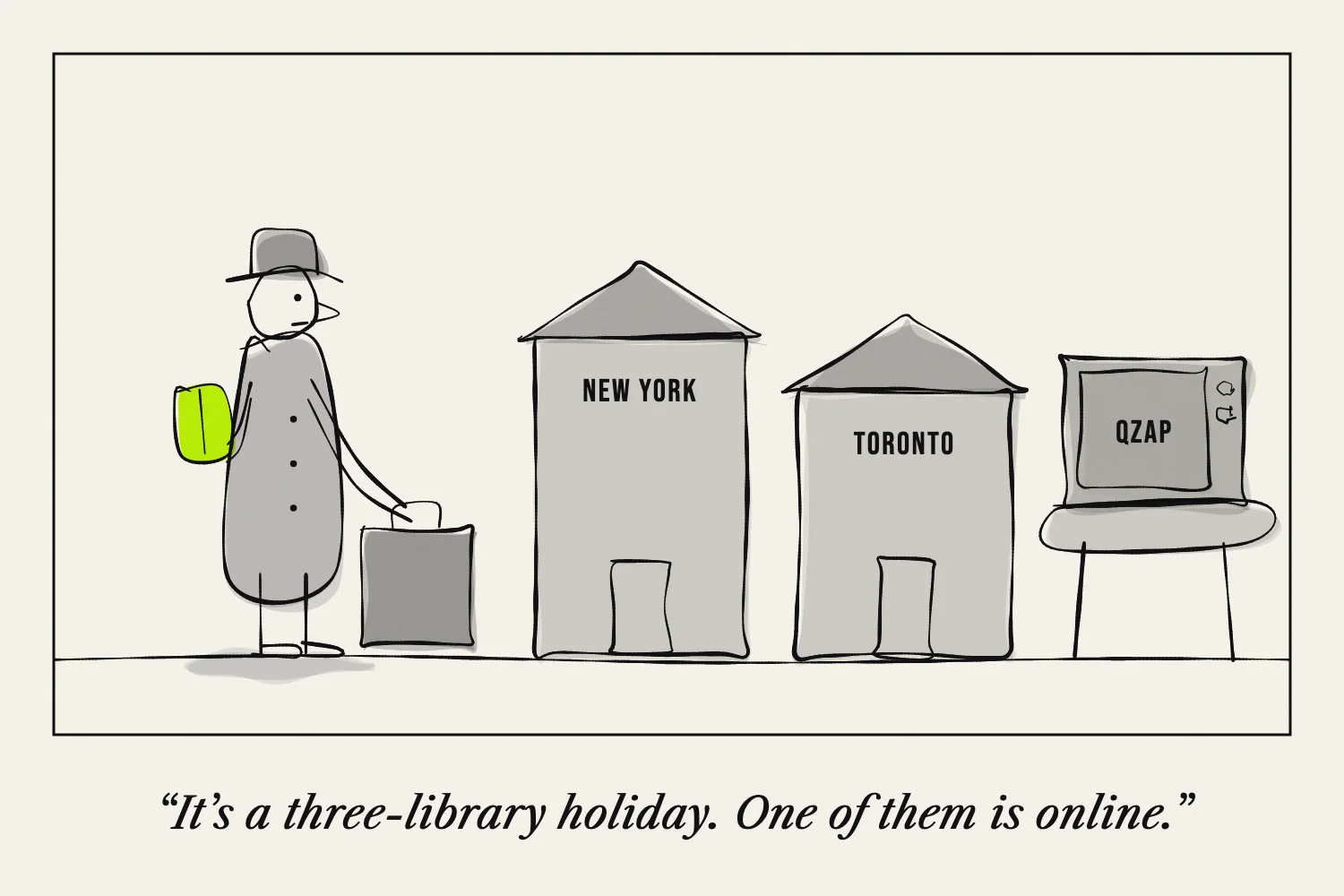
A zine library can be a place to browse, a research collection or a community archive. Those roles overlap, but they affect how you use the material.
Here are three starting points, chosen to show different approaches rather than to rank the “best” libraries. Details were checked in September 2026.
Barnard Zine Library: a focused university collection
Barnard's collection provides a way to explore zines through a library catalogue and research support.
Start with its collection description before searching. A collection's focus explains why some material is present and other material is not. It is an editorial and archival decision, not a complete map of zine culture.
If you want to visit, follow the library's current instructions for arranging access. Do not assume that a university collection works like a public lending shelf.
Toronto Zine Library: a community reading space
The Toronto Zine Library is run by a collective of readers, makers and librarians and is housed at the TRANZAC.
Its history explains that it changed from a lending library to a reference library. A reference library keeps material available for reading on site rather than lending it to take home.
Its access information also notes that the upstairs location presents limitations and that downstairs appointments can be arranged for requested material. Check the current arrangements when planning a visit.
QZAP: queer zines and a digital archive
The Queer Zine Archive Project preserves queer zine culture and provides an online route into its work.
A digital archive is useful when travel is not possible or when you want to explore before requesting particular material. It also allows you to compare work that might be difficult to find in shops.
An online selection is still a selection. It should not be assumed to include everything held physically.
How to make the most of a collection
Begin with one question or subject. Search for a title, a maker's credited name and a few related terms.
Write down the issue number and catalogue reference of anything you want to see. A title alone may not identify the particular copy.
Ask library staff for help when the catalogue does not answer your question. Explain what you hope to learn rather than only listing keywords.
Read the reproduction rules
Permission to read a zine is not the same as permission to scan and publish it online.
Use the library's copying guidance and ask about anything unclear. This is especially relevant when a work contains personal accounts or was originally shared with a small audience.
Next: Why Libraries Collect Zines.