Zine Ideas for Photographers
Build a small sequence around a visual question rather than simply gathering your favourite pictures.
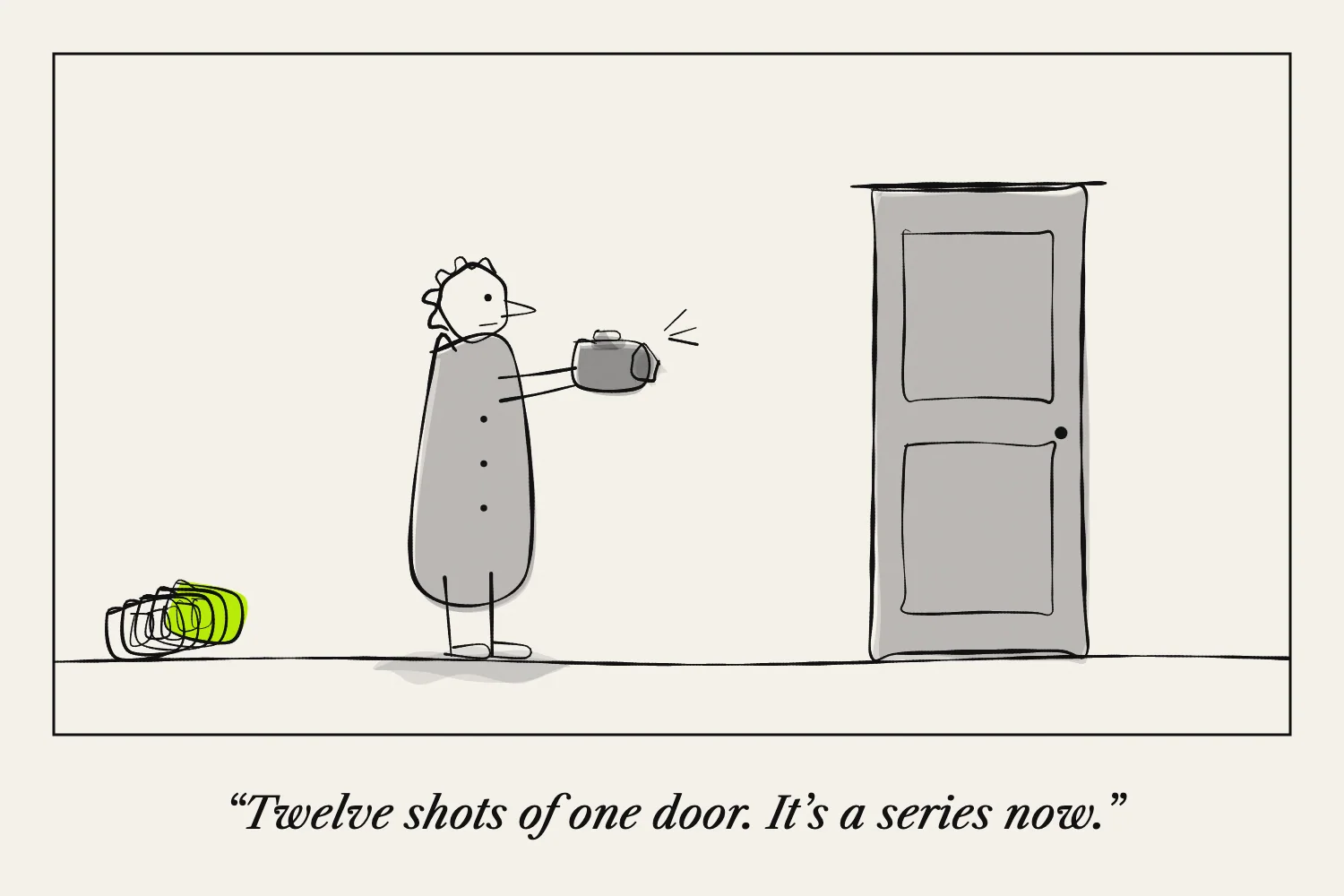
A photo zine needs more than a group of good photographs. It needs a reason for those photographs to share pages.
That reason can be a place, a repeated detail, a period of time or a movement from one kind of image to another.
Photograph one place through a rule
Try a familiar street without its landmarks, a room seen only in reflections or the edges of a public space.
The rule helps you notice what you usually pass over. It also gives the final sequence a focus that you can explain in one sentence.
Take more photographs than you expect to use, then select the ones that develop the idea most clearly.
Follow a change
Photograph an object before and after use, a view at different times or a place as activity begins and ends.
Keep the viewpoint consistent when comparison is the point. If you change position, decide whether that change adds information or makes the sequence harder to read.
A simple caption can supply the time or condition when the images alone cannot.
Build around visual connections
Choose photographs linked by a colour, a shape or a direction of movement.
A diagonal line in one image might lead towards a similar line on the next page. A crowded frame followed by an open one can alter the pace.
These are possibilities to test, not rules every reader will experience in the same way.
Use fewer images with clearer jobs
For a small first issue, try an opening image, several developing images and an ending image.
Ask what each contributes. Does it establish the place, add a detail, shift the mood or bring the reader back to something seen earlier?
Remove an attractive photograph if it does not belong to this sequence. You can save it for another project.
Decide what captions must explain
Captions can identify a place, distinguish dates or make uncertainty clear. They can also become a second narrative.
Avoid using a caption to repeat everything visible in the picture. Supply what a reader could not otherwise know.
For photographs involving other people, think about their expectations and seek permission where appropriate, particularly for private settings or personal material.
Judge the printed result
Screen brightness can conceal dark areas that become difficult to read on paper. Make a test at the intended size and inspect important details.
Check images across folds and confirm that a face or crucial object does not disappear into the binding.
Next: How to Make a Photo Zine.