Zine Ideas for Artists
Use pages to develop a sequence, show a process or test how images work together.
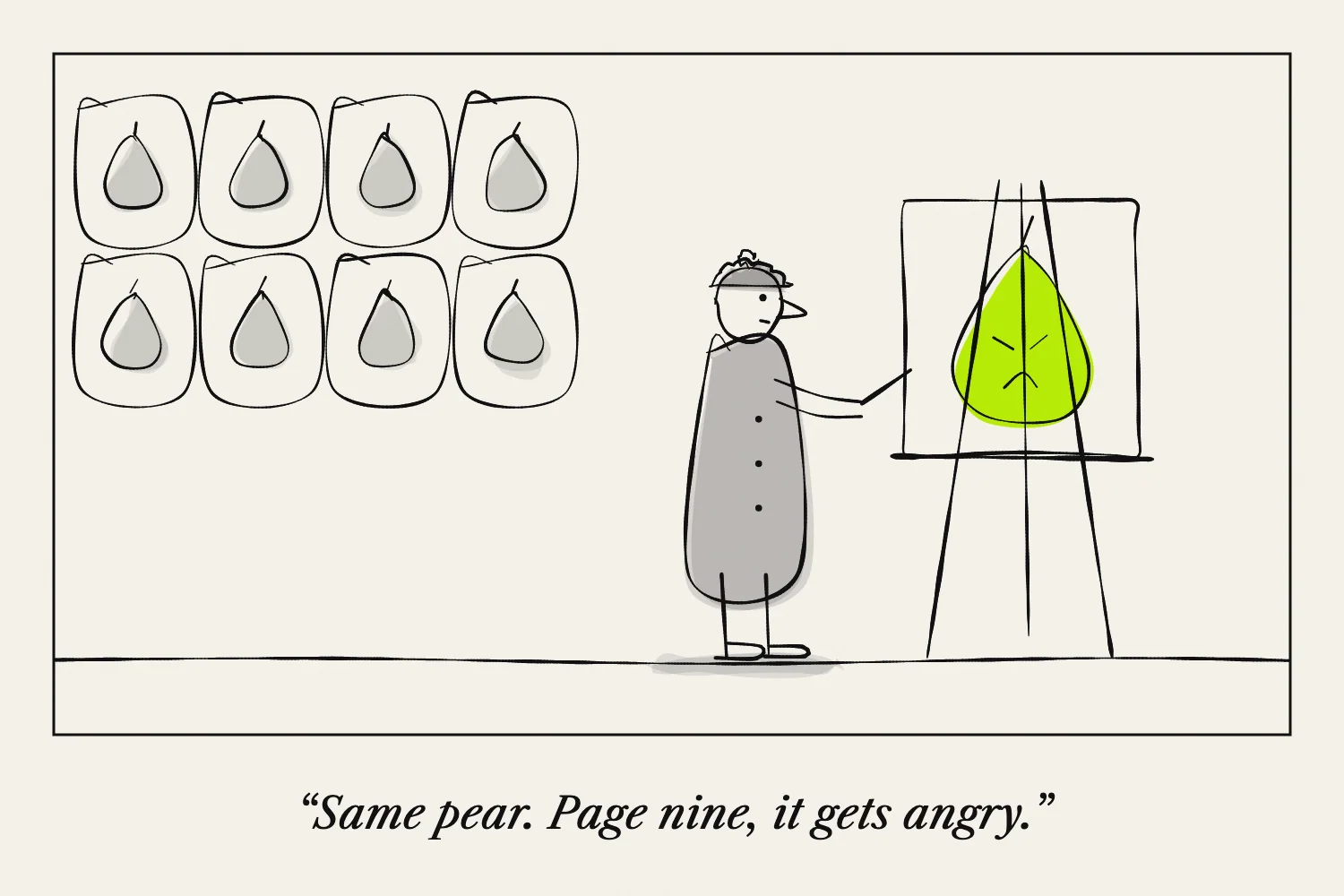
An art zine can be more than a small portfolio. It can make a sequence possible that would not exist if the images were shown separately.
Start by deciding what the page turn should do: reveal, compare, interrupt or gradually change something.
Repeat one subject with a changing rule
Draw the same object six times, changing one condition each time. Use a different distance, time limit, tool or viewpoint.
Keep the presentation consistent enough for readers to notice the change. If both the drawing rule and page design vary wildly, the comparison may become difficult to follow.
A short note can explain the experiment without telling the reader what to think of every image.
Show the decisions inside a process
Choose one finished work and place it beside selected sketches or tests.
Include only stages that reveal a decision. A page might show an abandoned composition; the next might explain what became clearer when you removed an element.
You do not need to reproduce every step. The zine should make the process understandable, not become a complete studio log.
Build a visual vocabulary
Collect marks, textures or shapes around a rule: corners, circles, rough edges or a particular kind of line.
Arrange the pages so one form leads to another. A curve in the first image might become the outline of an object later.
This can work without words. If you add labels, decide whether they identify the material, introduce a fictional system or create a joke.
Make the format part of the work
A fold can hide an image until the reader opens it. A small page can encourage close looking. An accordion can show several panels at once.
Test the structure with plain paper before making finished artwork. The idea should still function at the size someone will hold.
See How to Make a One-Sheet Zine for a starting structure.
Edit for relationships
Lay the images out and ask why each follows the previous one.
Two strong images do not automatically make a strong pair. They may repeat the same information or compete for attention. Try moving one, changing its scale or leaving a quieter page between them.
Print a rough copy and turn the pages. The assembled object will reveal pacing problems that a folder of image files cannot.