How the Internet Changed Zines
Online publishing changed how work travelled, but the history is more complicated than print being replaced.
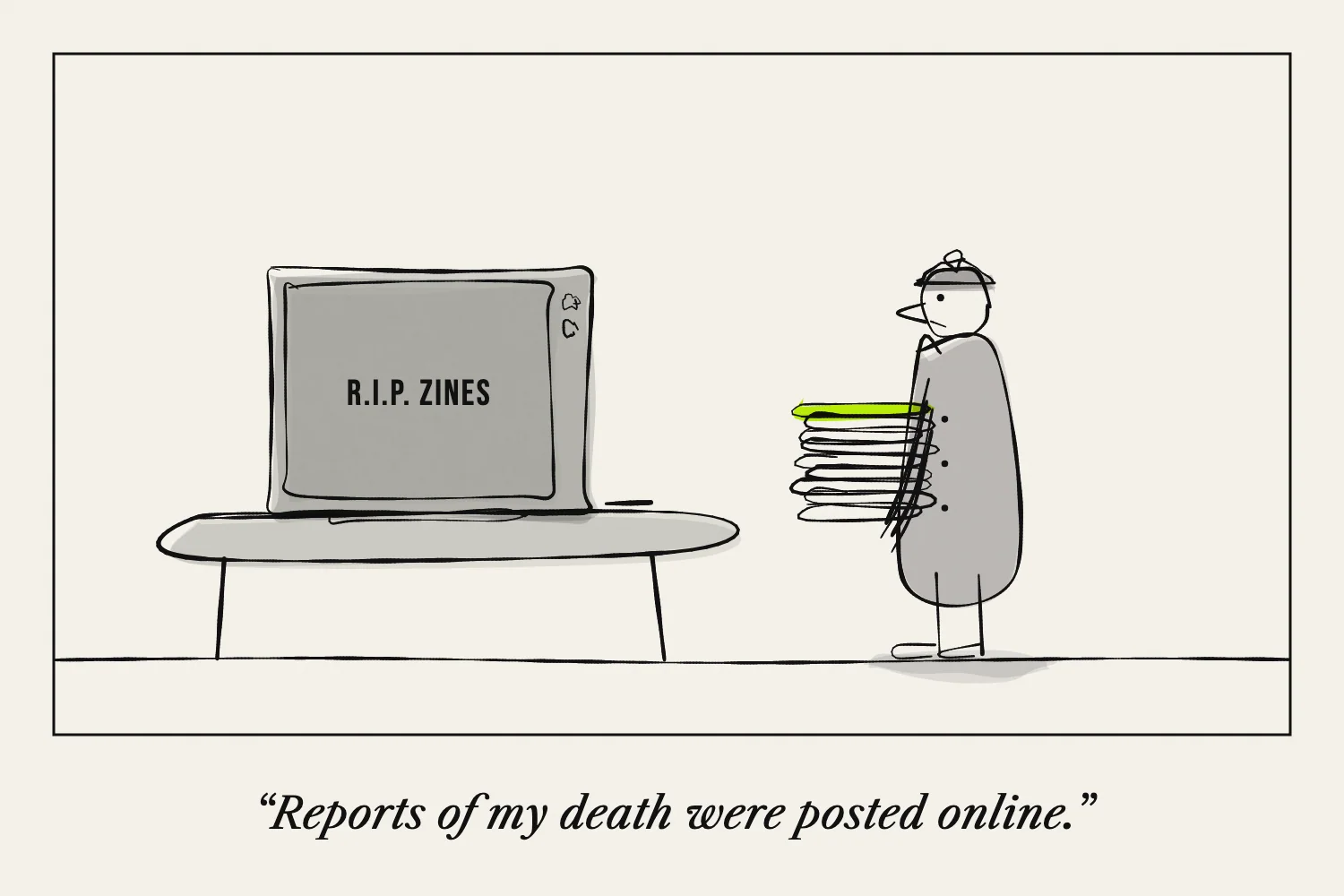
The internet gave independent publishers another way to reach readers. A piece could circulate without each reader needing a printed copy sent through the post.
That was a substantial change. It does not establish that the internet almost killed zines as a whole.
To understand what happened, it is more useful to separate publishing, distribution and preservation.
Publishing could move to another medium
A website or discussion group could host writing that might previously have appeared in print. Readers could respond without waiting for another issue.
But an online space still needed decisions about audience and moderation. Natalie Wang's research into early Star Trek discussion groups documents disputes over what belonged in a shared forum and the development of more specific spaces.
The medium changed the practical possibilities. It did not remove the social work of maintaining a community.
Print had costs that did not disappear
Printing and mailing an issue require money. A publication also depends on the people preparing it and handling orders.
When Maximum Rocknroll explained its decision to end its monthly print run in 2019, its FAQ discussed low print runs and high costs.
That is evidence about one publication's circumstances. It is not enough to assign every zine's difficulties to one cause, or to assume that an online readership automatically replaces print income.
Online distribution could also support paper
A maker can use a website to show a cover, explain a project and take an order for a physical issue. The web then supports the printed object rather than replacing it.
An archive can use the same technology differently. QZAP's introductory publication describes making queer zines accessible through an online collection.
Someone discovering an older publication through a scan is encountering print history by digital means. Paper and screen are doing different parts of the work.
“Zines disappeared” is too broad
The Toronto Zine Library's history records its establishment in 2006, the launch of a website and later changes to its catalogue and physical space.
That example does not measure the size of zine culture worldwide. It does show why a simple disappearance story is inadequate: people were still building institutions around printed zines during the internet era.
What a maker can decide now
Choose the job of each format.
A printed issue can be a finished sequence of pages. A website can make it easier to discover. A digital edition can reach someone who cannot obtain the paper copy.
You do not have to make every version. The useful question is which combination serves your work and the readers you want it to reach.
Read next: Why People Keep Making Zines.