How Superman's Creators Used a Fanzine
Before the familiar superhero appeared, Jerry Siegel and Joe Shuster published a very different Superman.
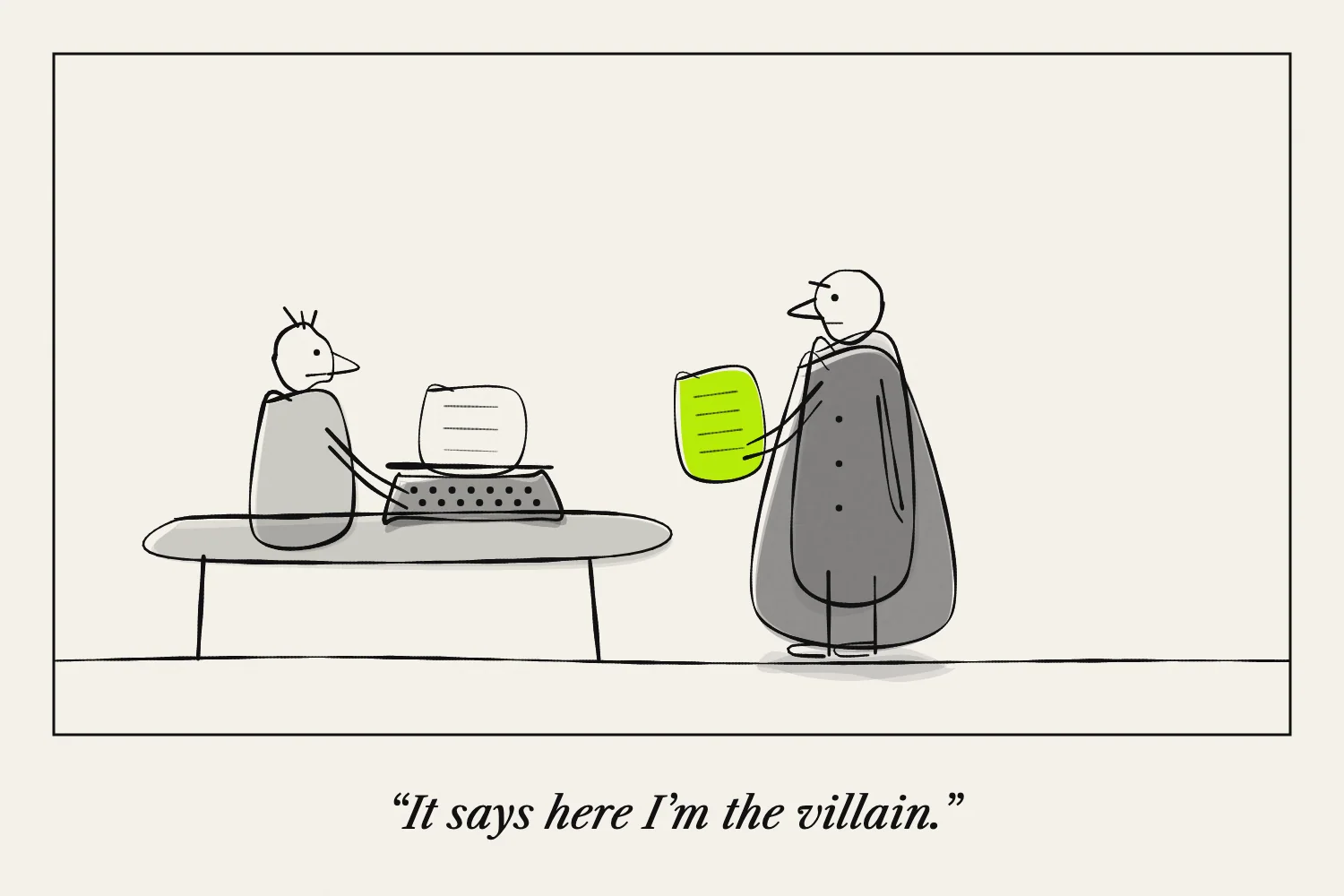
Superman's connection to zines is real, but the short version can be misleading. The character in Jerry Siegel and Joe Shuster's 1933 fanzine story was a villain. He was not the familiar costumed hero making an early appearance.
That difference makes the publication interesting: it records the creators trying an idea before it became something else.
A magazine they could make themselves
Siegel and Shuster produced Science Fiction: The Advance Guard of Future Civilization. Siegel edited it and Shuster supplied illustrations.
The Encyclopedia of Science Fiction records five issues, beginning in October 1932 and ending in 1933. The first contained stories Siegel wrote under several names.
A pseudonym is a name an author uses instead of their own. In a small publication, several bylines do not necessarily mean several contributors.
The Superman of January 1933
The third issue contained “The Reign of the Superman,” written by Siegel and illustrated by Shuster. Its January 1933 date is recorded in the encyclopedia.
The story's Superman was bald and villainous. The Heritage Auctions description of surviving issues distinguishes him explicitly from the later superhero. It also identifies Siegel's byline as Herbert S. Fine.
The work appeared as an illustrated prose story: text with accompanying artwork. It was not an early issue of a Superman comic book.
An idea can survive a change of character
The familiar hero followed in Action Comics in 1938. The connection is the creators and their developing idea, rather than a continuous account of the same character.
This is why “Superman started in a fanzine” needs another sentence. Without the explanation, a reader might reasonably imagine the later hero already wearing his costume and saving people in the earlier publication.
A more accurate description is that Siegel and Shuster used their own fanzine to publish an earlier, different Superman concept.
What the surviving copies tell us
The Heritage catalogue describes mailed copies of the first two issues with addresses and cancelled stamps on their backs. That physical detail connects the work to an actual circulation process: someone made these pages, and copies travelled to readers.
The catalogue also contains estimates about how many copies might have been printed. Those estimates should remain estimates. A rare surviving object does not, by itself, tell us the exact size of its original print run.
For a zine maker, this history offers a useful example of publishing as a place to try things. An early issue does not have to contain the final version of an idea to be worth making—or worth preserving.
Read next: How Comics and Zines Grew Up Together.