Zine Shops
How specialist shops help zines reach readers, and what to know before asking one to stock your work.
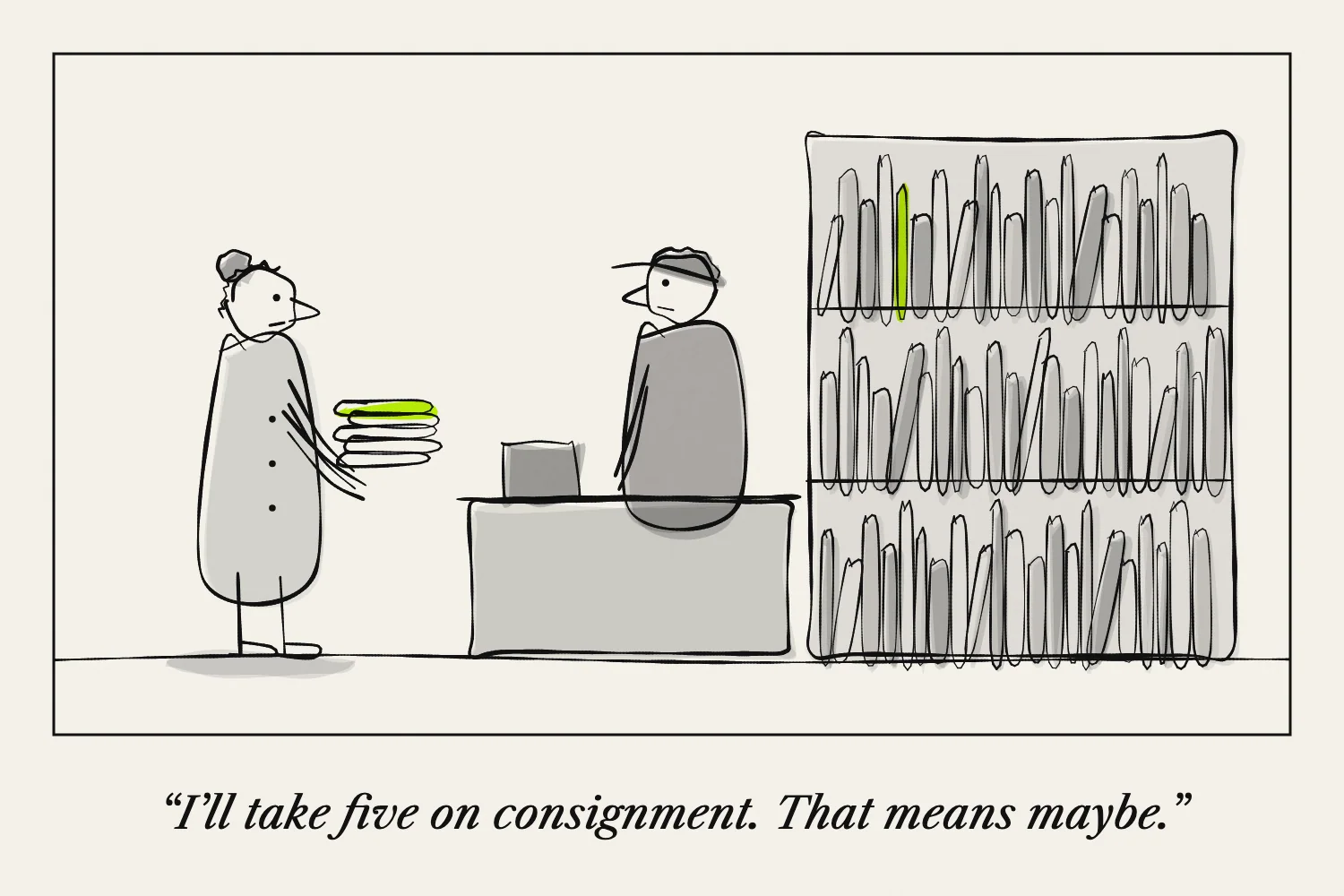
A zine shop gives readers somewhere to encounter publications they might never search for by name. Its shelves bring unrelated projects together: a personal account beside a music interview, a comic beside a booklet about local plants.
Some shops specialise in zines. Others sell them alongside books, records or comics. What matters for your visit is the actual selection and how the shop describes its interests.
A shop has a point of view
A shop chooses what to carry. That selection may reflect the staff's interests, a local scene or the kinds of work makers send in.
Quimby's in Chicago traces its opening to 1991 and describes a history rooted in independent publishing. Sticky Institute provides another starting point in Melbourne. These are examples to explore, not a ranking or a complete international directory.
Browse unfamiliar sections as well as the subject you came for. If you ask staff for help, describe something you enjoy: short comics, first-person writing, experimental photography or publications about a particular place. You do not need to know the correct category first.
Reading the price
A thin publication is not necessarily cheap to produce. Its price may reflect printing, materials and the number of copies made. Two zines with the same page count can involve very different work.
For a specific publication, ask what the edition includes rather than guessing from its size. A shop listing may explain a special insert or printing process. Avoid assuming every handmade variation is an error—or a valuable rarity.
Getting your own zine stocked
Read the shop's submission policy before posting copies or arriving with a box.
A shop may buy copies from you outright, or take them on consignment. With consignment, the shop holds your copies and pays you according to the agreement when they sell. Unsold stock still needs an agreed way to be accounted for or returned.
Quimby's consignment page is an example of a shop setting out its own procedures. Do not assume another retailer uses the same terms.
Record the title, issue, quantity, retail price, payment arrangement and date you supplied copies. Keep the shop's receipt or confirmation. Agree how to check sales and what happens to unsold or damaged stock.
Check before travelling
Opening hours, addresses and stock change. Use the shop's own website to confirm a visit, and ask about a particular title if that is the reason for your trip.
For other ways to discover publications, see Where to Find Zines.