Calls for Submissions
How to understand an invitation to contribute, decide whether it fits, and prepare a clear submission.
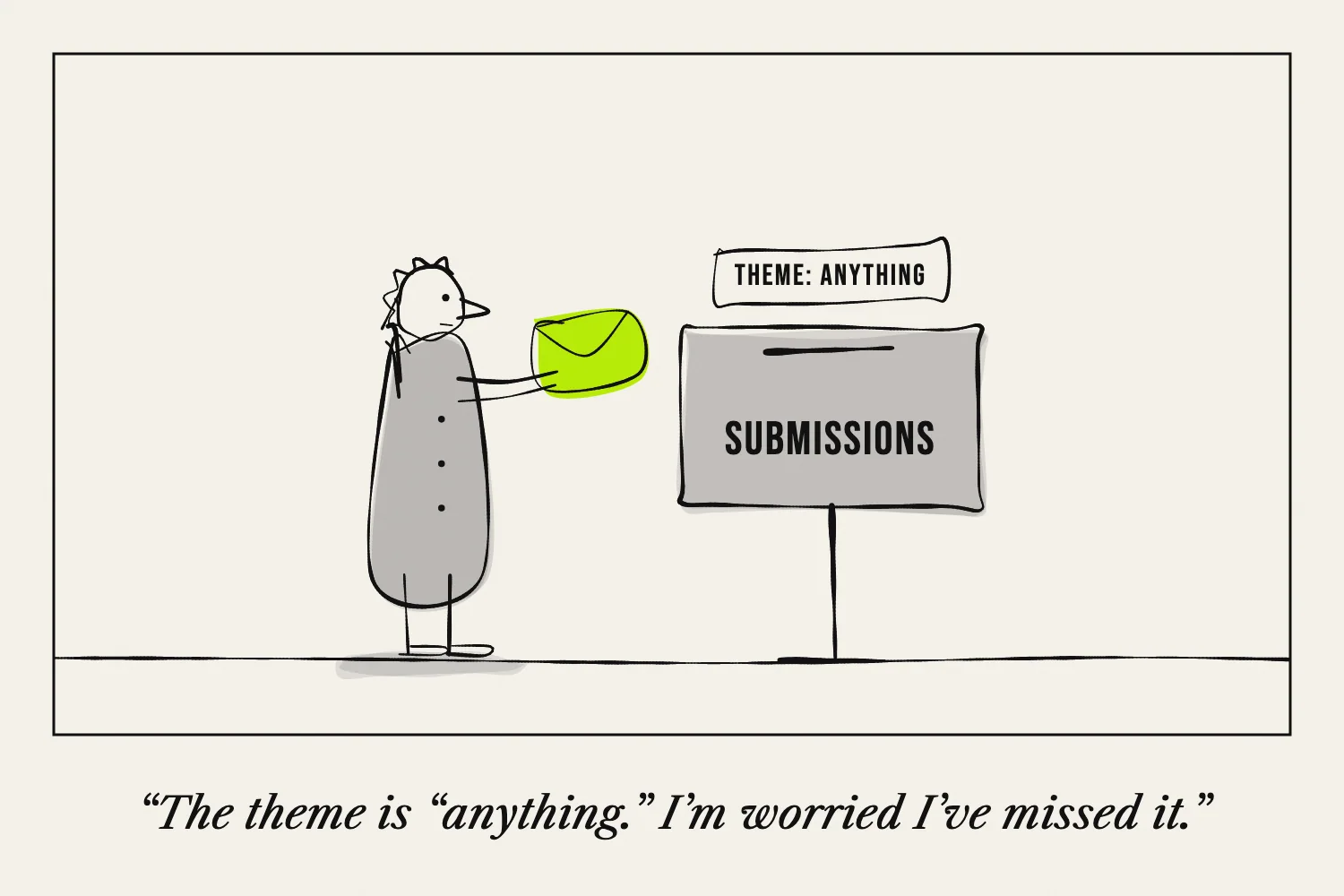
A call for submissions is an invitation to send work for a publication or project. An editor might ask for drawings about a theme, short personal accounts, photographs or completed comics.
It is different from an application to sell at a fair. It is also different from asking a shop to stock your finished zine. Read what the organiser is actually offering before preparing anything.
Find the original call
Shared posts and listings can help you discover opportunities, but follow them to the organiser's full instructions.
The Toronto Zine Library website links to calls for submissions as part of its resources. Treat a directory like this as a starting point: check the original notice for its year, deadline and current status. An old post can remain searchable long after a publication is finished.
Save a copy of the instructions you use, especially if the call appears only in a social media post.
Work out whether it fits
Read the theme and who may contribute. Some projects welcome anyone; others gather work from a particular community or from people with a stated experience.
Next, check the requested form. A word limit, page size, colour restriction or file type can determine whether an existing piece is suitable. If the instructions ask for a proposal, do not assume they want a finished article.
Do not invent personal experience to match a call. You can look for another project or ask whether the editor welcomes a clearly described alternative.
Understand what happens after submission
Look for how selections are made, when contributors will hear back, and whether edits are expected.
Check the proposed credit, any payment or contributor copy, and how the work will be distributed. Will there be a printed edition, a downloadable file, or both? Does the organiser explain what permission they want to reproduce your work?
If an important term is missing, ask before agreeing. Keep the editor's answer with your records. This is especially useful when you want to include the same work in your own zine later.
Prepare a submission someone can use
Follow the requested delivery method. Give files clear names and include the title, your chosen credit and contact details where requested.
For a collaborative piece, confirm everyone involved agrees to its submission. Check that images and quotations have the necessary permissions and attribution.
Keep a copy of the sent work and note the deadline, including its time zone. Then wait for the stated response period before following up.
Make room for a no
A declined piece may not fit the editor's theme, space or mix of contributions. Save it, revise it if useful, or develop it into your own publication.
How to Choose a Zine Topic can help you give that material a new direction.