Where Did Zines Come From?
Zines grew from several ways of making and sharing print outside established publishing.
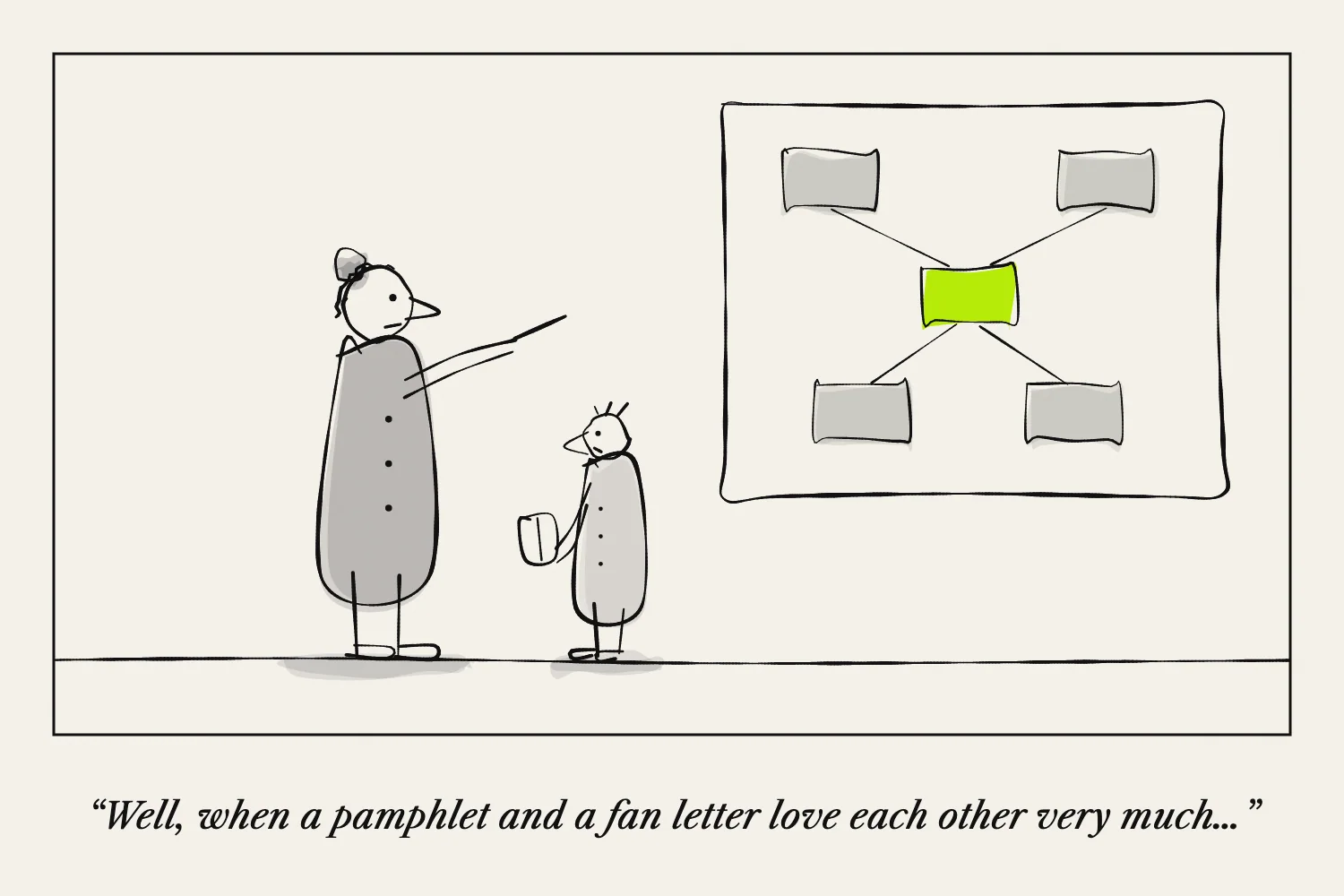
A zine does not have one inventor. Its history brings together people who wanted to publish their own writing, people looking for others with the same interests, and people whose experiences were missing from established publications.
To understand that history, it helps to separate two questions: when did people start making publications themselves, and when did the particular culture of fanzines develop?
People were publishing for themselves already
In the nineteenth century, hobbyists made small newspapers and exchanged them with other hobbyists. This is what historians mean by the amateur press: people doing the writing, editing and printing for their own interest rather than as employees of a newspaper business.
“Amateur” describes that arrangement. It does not tell you whether the work was thoughtful or skilful. The University of Iowa places these publishers among the earlier precedents for zines.
A shared interest gave readers a reason to connect
Science-fiction magazines helped bring another kind of publishing community together.
A magazine's letters section printed messages from readers. Someone reading it could discover that another person cared about the same story, disliked the same ending or wanted to discuss the same scientific idea.
Those conversations could continue beyond the magazine. Readers corresponded, formed groups and made publications of their own. Iowa's account of early fan publishing describes copies travelling through the post and being shared at conventions.
The important change was that readers now had space they controlled. They could choose the subjects and publish each other's contributions.
An early example
The Comet, issued in May 1930, was the bulletin of the Science Correspondence Club. FANAC's archive identifies it as an early fanzine and records its later title, Cosmology.
A club bulletin might sound modest beside the idea of a cultural movement. But a movement does not need to begin with a manifesto. A few pages that connect people can establish a way of working that others develop.
Why there is no single straight line
A political pamphlet, a club bulletin and a personal zine can share a method—publishing outside a large organisation—without being the same kind of object.
It is therefore more useful to ask what each publication made possible than to force every earlier booklet into the category “zine.” Who could contribute? Who received it? Could readers reply? Who decided what appeared?
Those questions explain the connection between older forms of self-publishing and the zines people make today.
Read next: The First Zines Weren't Punk.