The First Zines Weren't Punk
Punk gave zines a powerful visual identity, but fan publishing was already decades old.
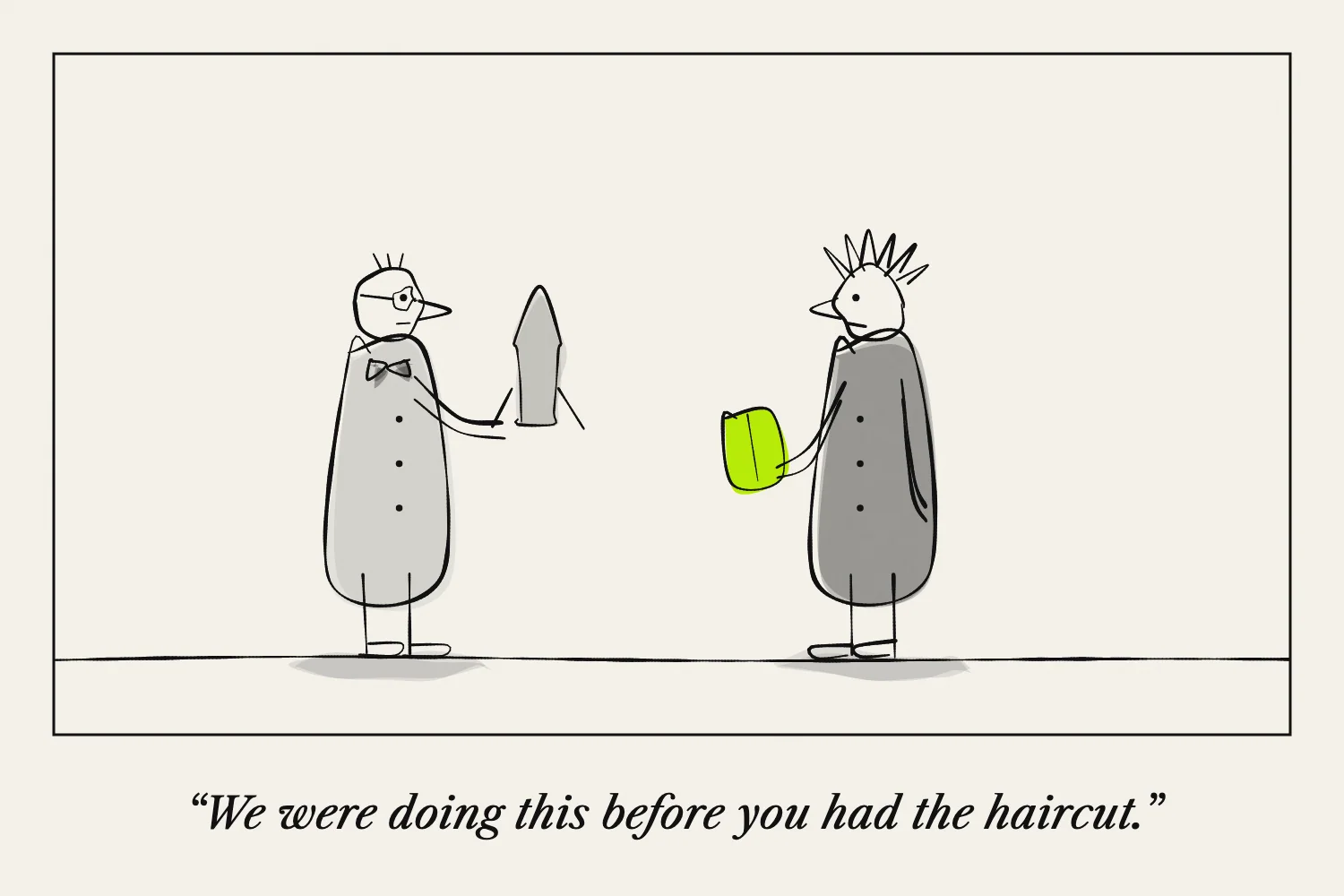
When someone says “zine,” you might picture a black-and-white page covered in cut-out headlines and photographs of bands. That is one influential part of the story. It is not the beginning.
Science-fiction fans were making their own publications in the 1930s, long before the punk zines of the 1970s. Duke University Libraries' timeline places The Comet in 1930 and the emergence of punk zines in the mid-1970s.
Understanding that gap helps explain why zines can take so many different forms.
Early fanzines were places to participate
A fanzine is a publication made by fans. Making one allows a reader to do more than consume someone else's work: they can review it, discuss it and publish their own ideas.
In his recollection of the New York science-fiction group the Scienceers, Allen Glasser described members contributing to a club paper called The Planet. He prepared the printing stencils, while Philip Rosenblatt made the copies. It was a shared project with practical jobs as well as writing. Glasser's account, reprinted in 1961, is a participant's memory rather than a complete history.
That distinction matters. The record of early zines includes personal recollections, surviving copies and later catalogues. Each can tell us something different.
Punk made the approach useful in another setting
For someone excited by a local band, a small publication offered a way to write about music without waiting for a large magazine to notice it.
Sniffin' Glue, started by Mark Perry in July 1976, is a well-known example. Its official history records a run of twelve issues. Its short life is a reminder that a publication does not need to last for decades to have an influence.
Punk zines helped make a particular approach recognisable: people involved in a scene could also document it and argue about it.
A style is not a requirement
Once a visual style becomes familiar, it can start to look like a rule. But rough lettering, visible tape and photocopied photographs do not determine whether something is a zine.
A carefully typeset science-fiction discussion and a handwritten account of a gig may look quite different. What connects them is that people have taken responsibility for making and sharing their own publication.
This broader history leaves room for photo zines, personal writing, comics, poems and publications that do not resemble punk graphics at all.
If you are making your first issue, you can borrow a style you enjoy. You do not need to imitate one to belong to the form.
Read next: What Makes Something a Zine?.