Tiny Obsessions That Could Become a Zine
Turn repeated attention into a small collection with a clear point of view.
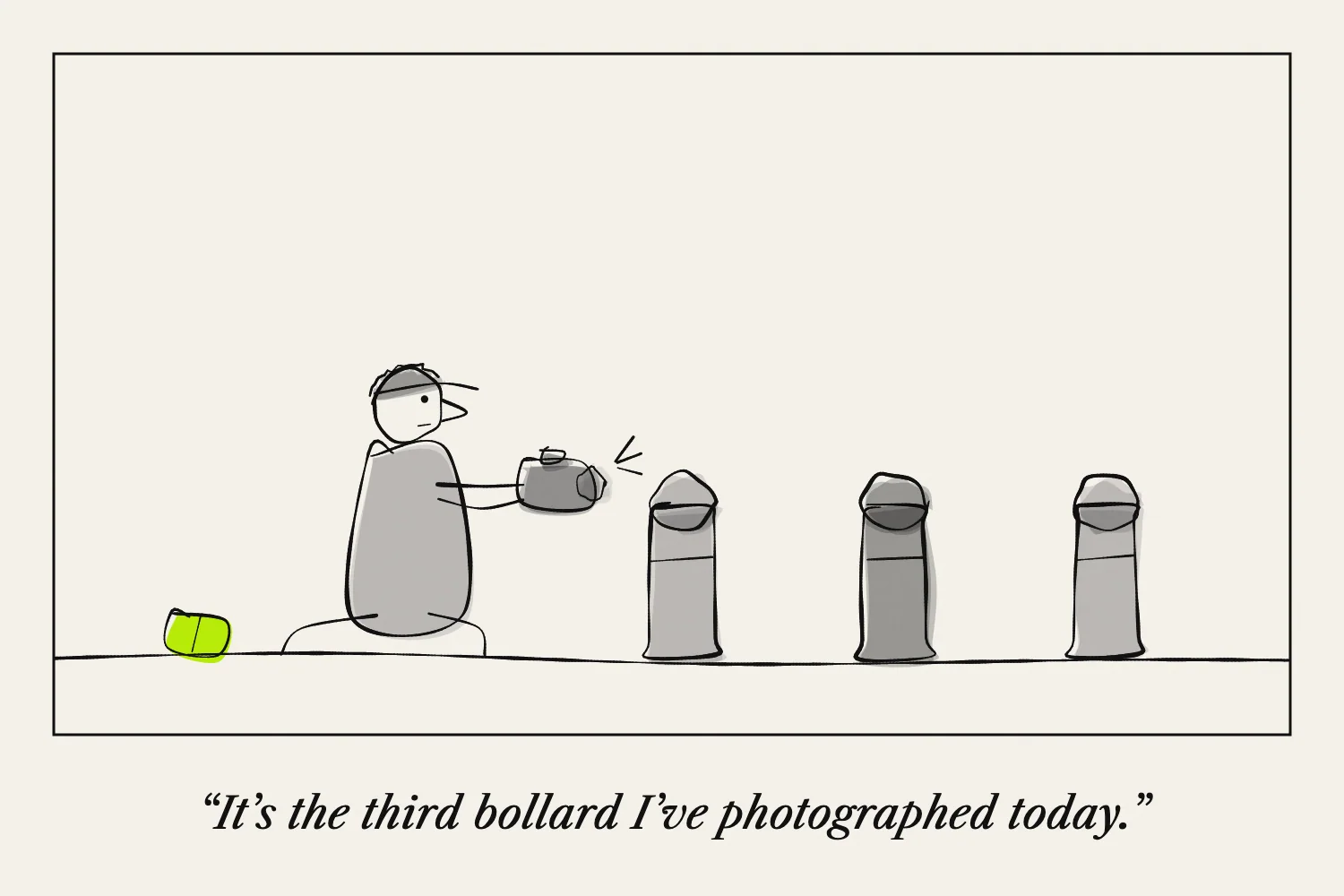
Notice what you keep noticing.
It might be badly repaired signs, decorative tiles, the names of paint colours or the particular way someone wraps a parcel. Repeated attention can supply enough material for a zine, even when the subject seems too small for a larger project.
The next step is to decide what you want a reader to notice too.
Choose an angle, not just a category
“Tiles” names a subject. “The six tile patterns I pass on my way to work” gives it a boundary.
“Packaging” is broad. “How three parcels were protected using almost no plastic” gives you a comparison.
Write the most specific sentence you can about your interest. If it contains several separate subjects, save some for another issue.
Choose a form of attention
You can approach the same interest in different ways:
- A catalogue identifies examples.
- A comparison explains differences.
- A personal essay describes why you care.
- A visual sequence lets the reader study the subject.
- A fictional guide invents a system around it.
Decide which form fits the material you actually have.
If you invent a classification or a history for fun, make the fictional nature clear. A playful voice should not leave readers mistaking invented facts for research.
Gather enough variation
Six near-identical examples may be useful if repetition is the point. Otherwise, look for differences that give each page a reason to exist.
For a zine about repairs, one page might show a temporary fix, another a repair that became decorative and another an object repaired more than once.
Describe what you can observe. Do not invent the owner's motives when you do not know them.
Explain why it holds your attention
A short introduction can make an unfamiliar interest accessible.
You might explain that you began noticing a detail on a repeated journey, or that one example made you look more closely at others. You do not need to argue that everyone should share the interest.
Your specific attention is enough to give the reader an entry point.
Stop before the subject becomes a burden
Set a limit: one route, one afternoon, six examples or the material already in one folder.
A zine can be a record of your interest at this moment. It does not need to become the definitive guide to the subject.
Next: Weirdly Specific Zine Ideas.