Magazines That Began as Zines
Some publications grew into larger magazines while keeping a connection to their small beginnings.
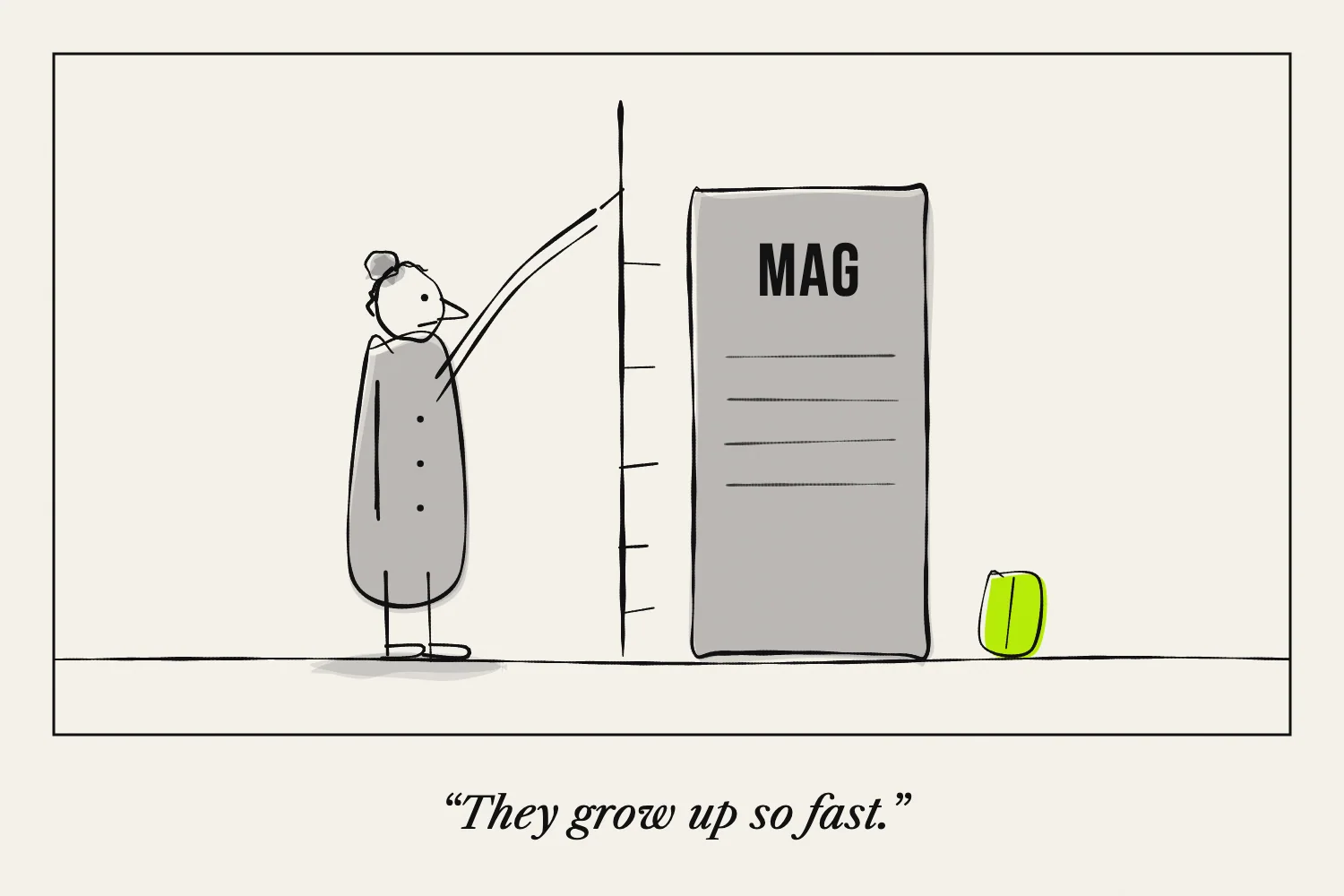
A publication can begin with a small group of makers and later reach a much wider readership. Its printing, staffing and distribution may change along the way.
That makes “started as a zine” a useful piece of history, but not a complete explanation of what the publication became.
Three examples show different paths.
i-D: documenting style
Terry Jones launched i-D in 1980. Its early form was a stapled publication concerned with how people presented themselves, rather than only with fashion as a set of products.
A history prepared in collaboration with London's Fashion and Textile Museum traces the development from those beginnings into an international magazine.
The example shows how a particular editorial interest can be larger than its first production method. The subject and point of view give the publication a reason to exist; the physical format can change as the project develops.
Bitch: a feminist response to popular culture
Bitch began in 1996. Its early issues provided space to examine popular culture through feminist criticism.
The People's Graphic Design Archive record of issue two preserves an example of the early publication. A twentieth-anniversary retrospective describes the founders' approach to media and culture.
The point was not simply to make a smaller version of an existing women's magazine. The editors were choosing a different set of questions to ask of the material around them.
Alter Ego: a title revived at another scale
Alter Ego began as a comics fanzine in 1961. Its later life included a revival through TwoMorrows.
The publisher's own history records that revival in 1999. This was not an uninterrupted march from a tiny first issue to a large magazine. A title can pause, return and operate in a different publishing arrangement.
That distinction is worth keeping when tracing any long-lived publication. A shared name does not necessarily mean the same organisation has produced every issue.
What changes when a publication grows
A larger print run means more copies to finance and distribute. A regular schedule creates continuing work. Paying contributors and staff requires income.
Growth therefore involves editorial and practical choices, not just a bigger audience. A publication may gain resources while taking on obligations its earliest makers did not have.
A zine does not need to become a magazine
These histories are interesting because of the different decisions involved. They are not a ladder every maker is expected to climb.
A single issue can do its job completely. An ongoing zine can remain small deliberately. The useful question is whether a change in scale serves the work and the people making it.
Read next: Why Are Zines Often Made in Small Editions?.