How to Plan an 8-Page Zine
Give every page a purpose before you start arranging the printable sheet.
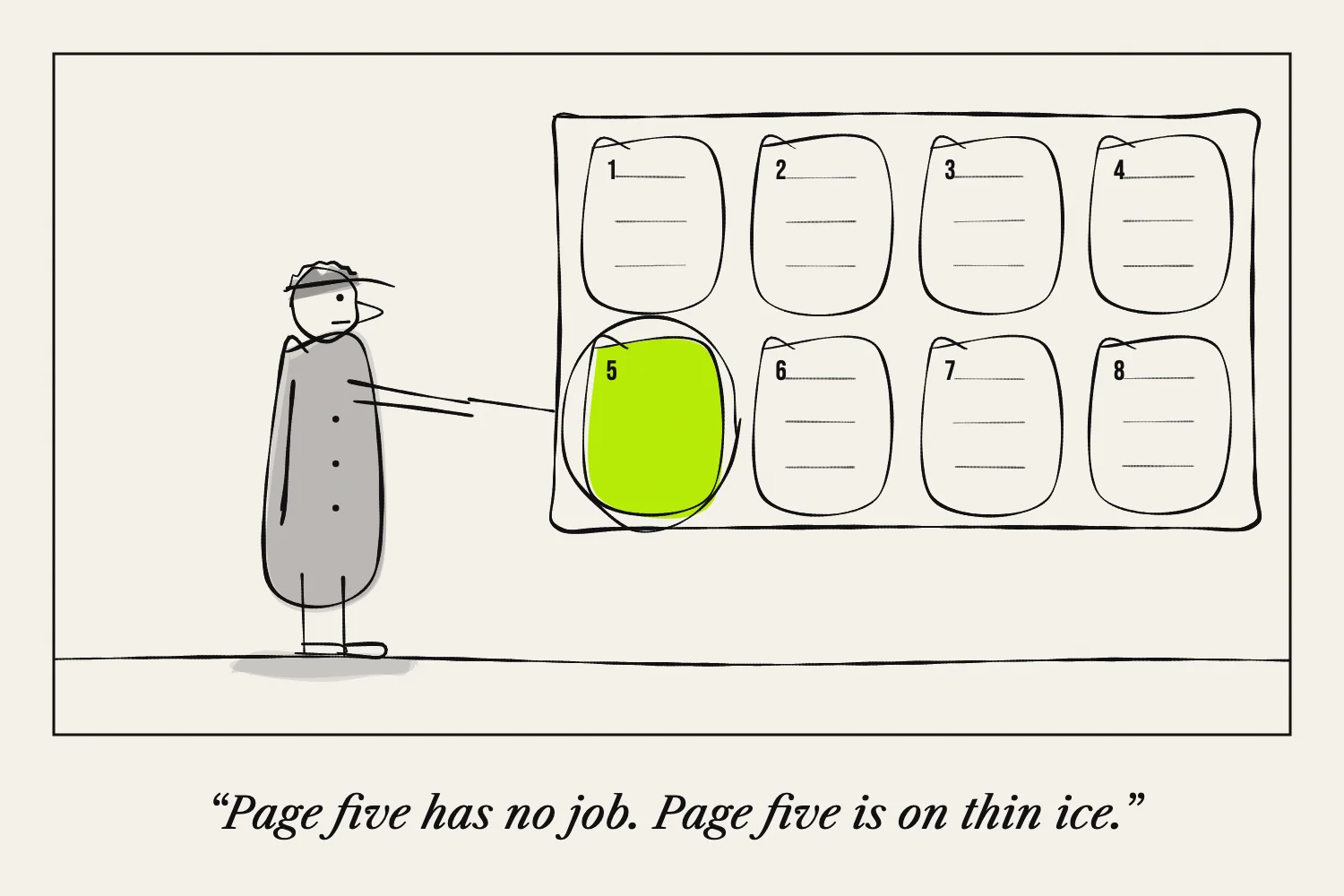
An eight-page zine has eight reading surfaces. If you use a front cover and a back cover, six pages remain for the main material. Planning those six pages first helps you avoid running out of room halfway through.
This article is about reading order. The arrangement on a flat sheet comes later, in How Zine Pagination Works.
Give each page a job
Draw eight small boxes on scrap paper. Label them one to eight and write a short description in each. This is a page plan, not finished artwork.
Here is a suggested plan for a zine about an object you have kept:
| Page | Purpose |
|---|---|
| 1 | Cover: show or name the object |
| 2 | Introduce what it is |
| 3 | Explain where it came from |
| 4 | Show a detail or sign of wear |
| 5 | Tell one event connected to it |
| 6 | Explain what you think about it now |
| 7 | End with a final image or thought |
| 8 | Credits, date and optional contact details |
The structure is an example. A poem, photo sequence or instruction zine will need a different plan.
Plan facing pages together
In a conventional eight-page reading sequence, pages two and three face each other, followed by four and five, then six and seven. Each pair is a spread.
Think about what the reader sees together. Two pages might compare before and after, show a picture beside its explanation, or give a short piece of writing room to breathe.
Keep important text clear of the middle fold. A photograph can cross it, but the fold may interrupt a face or a small detail. A paper test will show whether that matters.
Choose the amount of information
Write a rough version of the densest page. Place it at the intended size and print it.
If it is hard to read, remove repetition or split the idea across pages. Do not assume reducing the text size will solve an overcrowded plan. If several pages need much more space, reconsider the format.
A quiet page is allowed. One picture can do a complete job if the reader understands why it is there.
Test the sequence in a folded copy
Fold a blank zine and label the pages. Add a few words or thumbnail drawings to represent your material. Turn through it at a normal reading pace.
Check whether page two gives enough context, whether the middle develops the subject, and whether page seven feels like an ending. Page eight can carry practical details without having to explain something essential you forgot.
Once the sequence works, use that folded copy to map the pages onto a print layout. Keep it beside you while you work.
Barnard's zine genres guide identifies the one-sheet slit-and-fold booklet as one form of eight-page zine; other eight-page booklets can be assembled differently.