How to Build a Personal Zine Library
A small catalogue and a consistent storage system make a growing collection easier to use.
A personal zine library is a collection you can navigate. The aim is to know what you have, find it when you want it and understand enough about each copy to avoid confusion.
You can do that with a notebook, a spreadsheet or another tool you already use. Start simply enough that adding the next zine will not feel like a major task.
Give each copy a record
Use one row or entry per copy. Record the title, creator's credited name, issue number, publication date and a few subjects.
Add a location such as “Box 2, folder C.” If you keep two editions of the same issue, give them separate records so their differences do not disappear.
Copy the name printed in the publication. A credited pseudonym—a chosen publishing name—is part of the work's identity. Do not replace it with a private name you happen to know.
The zine cataloguing guide at zinelibraries.info explains why privacy and conventional categories need particular thought with zines.
Separate what you know from what you infer
An issue may have no year, an unclear title or several possible creator names.
Write “undated” or add a note explaining the uncertainty. If you estimate a date from an event mentioned inside, label that as an estimate rather than quietly entering it as fact.
Likewise, keep “acquired in 2026” separate from “published in 2026.” Those statements describe different events.
Choose a physical order you can maintain
Alphabetical order by title is straightforward. Subject sections can work too, especially if your interests fall into a few broad groups.
A zine about queer gardening could fit more than one section. Place the copy in one location and give it both subjects in the catalogue.
This avoids buying a second copy simply because you forgot which shelf held the first.
Decide how lending will work
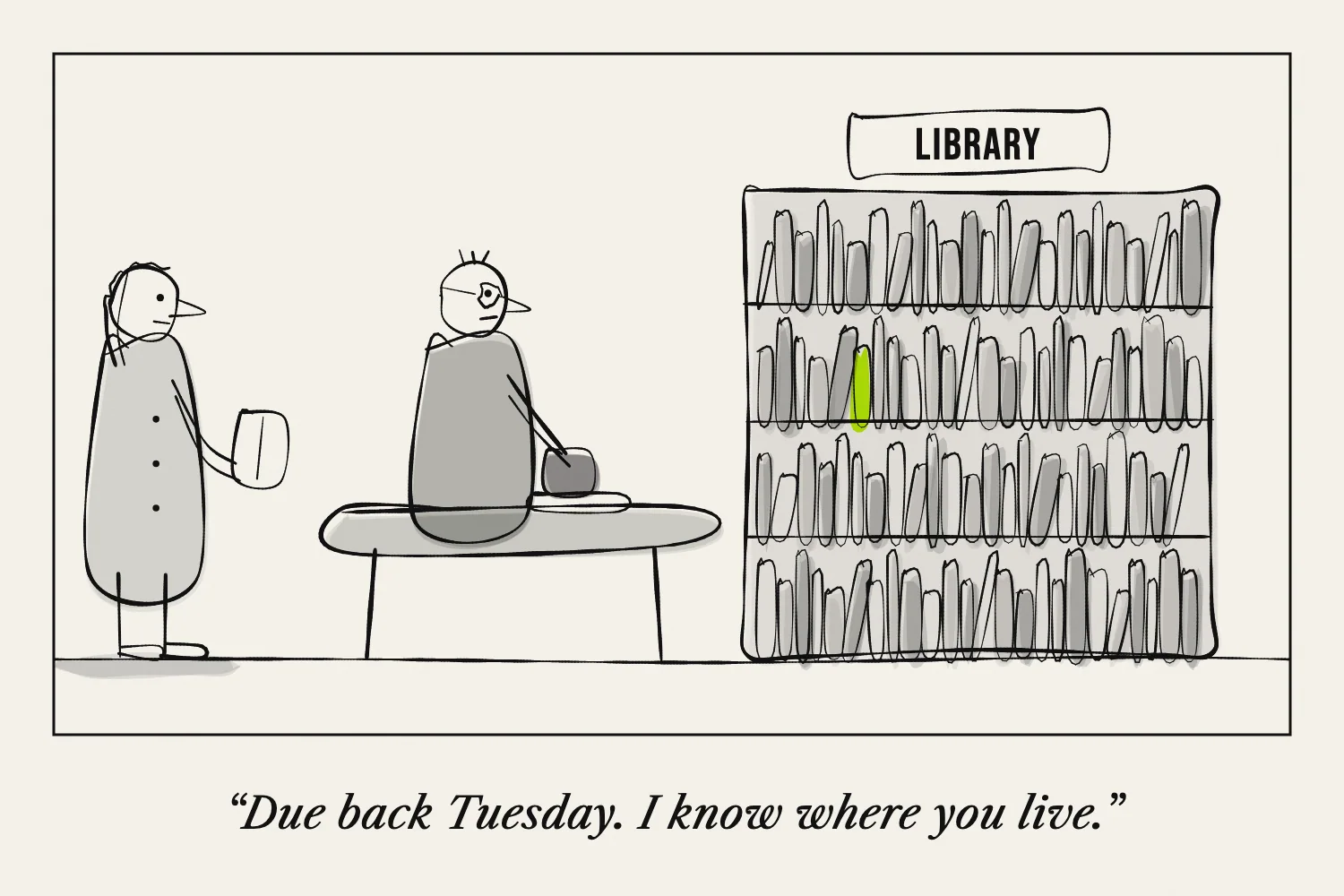
If friends borrow from you, record the title, borrower and date. Agree on whether you want it back by a particular time.
For an irreplaceable or fragile copy, you can choose to let someone read it with you instead. Make the arrangement clear before handing it over.
The point is to prevent uncertainty, not to turn a friendly exchange into administration.
Review the system occasionally
Check that the catalogue still matches the boxes and that loose inserts remain with their publications.
Back up a digital catalogue. Keep a short explanation of your labels so that someone else could understand them if needed.
You do not need a professional library system. You need enough consistency for the collection to remain readable as it grows.
Next: How to Store and Preserve Zines.